
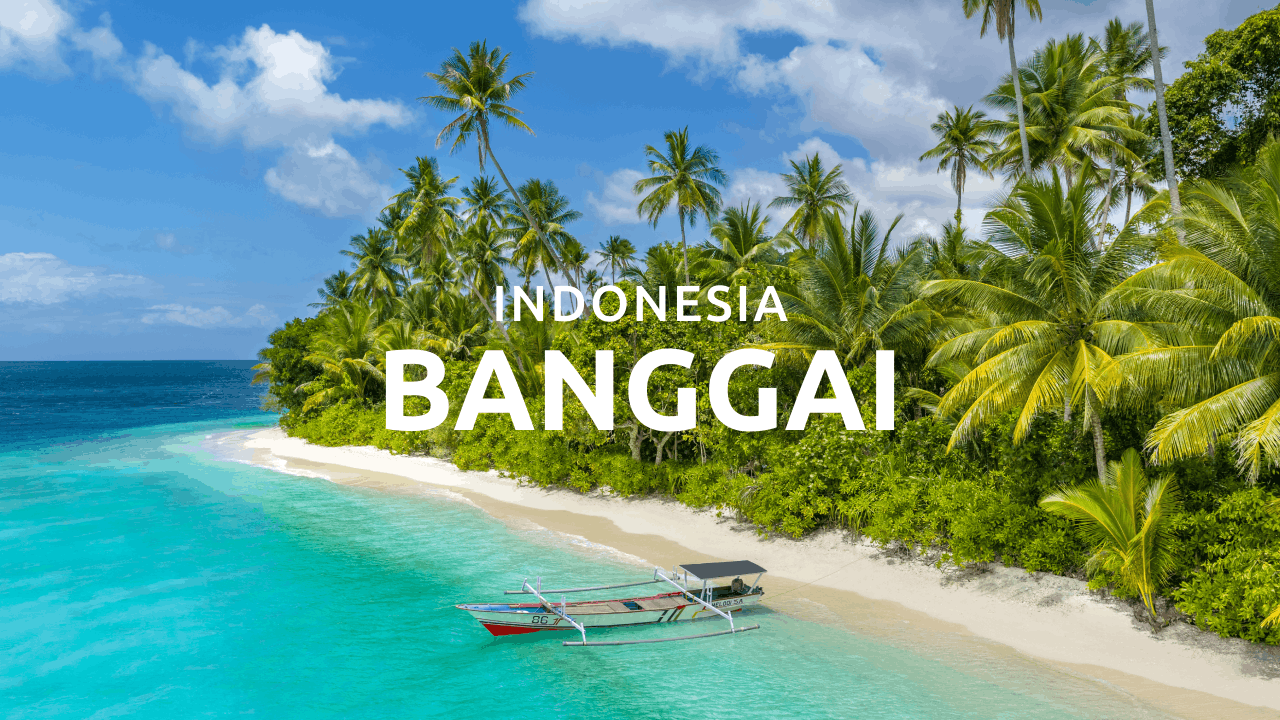
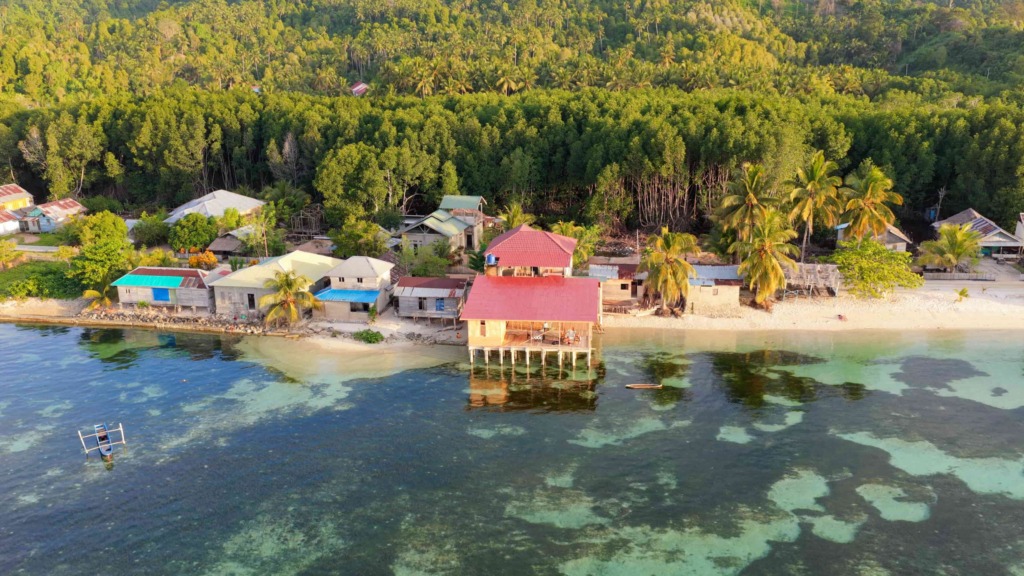
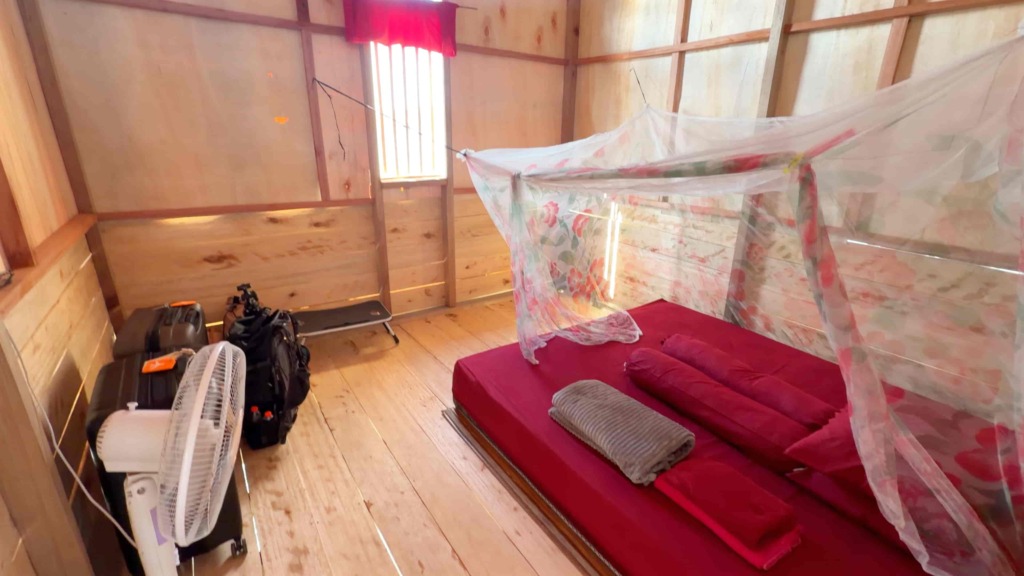
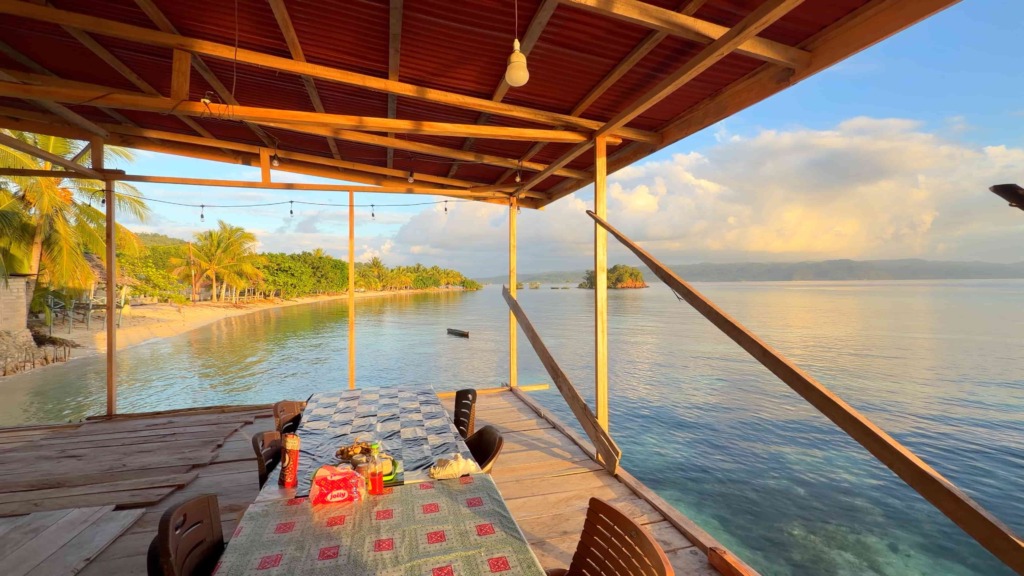
After several days on Peleng, we crossed to Banggai Island and based ourselves at Kia Homestay for five nights. Our simple room stood over the water in Bone Baru, with a reef offshore and an open view across the bay.
This is not a complete guide to the Banggai archipelago. It covers the part of Banggai Island we experienced in early June 2026: three full days of beaches, snorkelling, photography and village journeys arranged largely through our homestay.
Banggai Island at a glance
- Location: Banggai Laut Regency, Central Sulawesi, Indonesia
- Our base: Kia Homestay in Bone Baru
- Time to allow: Three full days, or around four nights including travel
- Getting around: Scooter and locally arranged boats
- Highlights: Long Beach, Tanjung Gundul, Teluk Lalong and Pantai Bontolan
- Best for: Snorkelling, quiet beaches, village life and travel photography
- What to expect: Simple accommodation and transport arranged largely through local contacts
Banggai Island, Banggai Laut and Peleng
The names used around this part of Indonesia can be confusing.
The Banggai Islands form an archipelago off eastern Central Sulawesi. Peleng is the largest island and sits to the north; Banggai Island lies within the separate Banggai Laut Regency. Banggai town is also on Banggai Island.
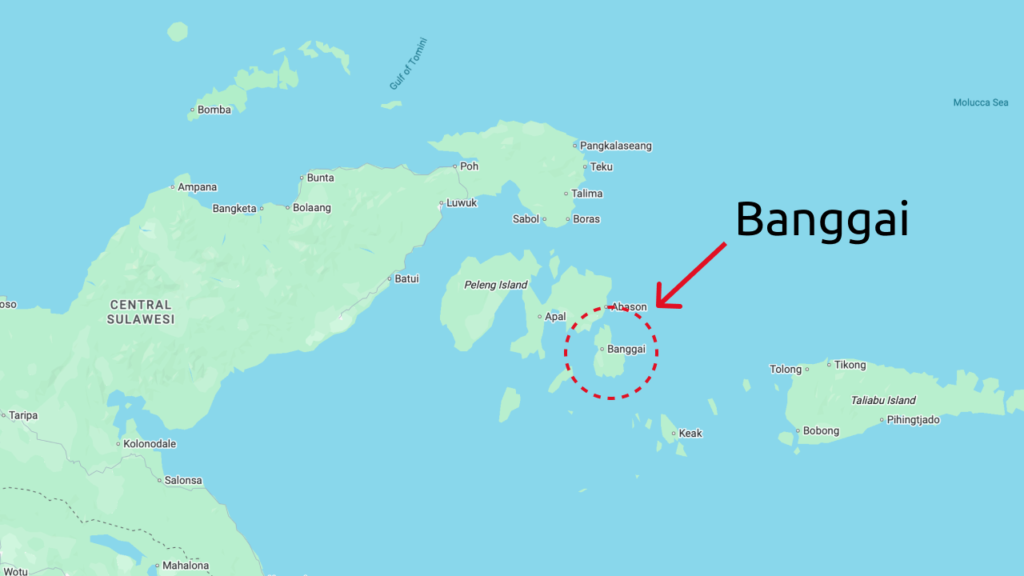
Before arriving, we spent four nights near Paisu Pok Lake on Peleng Island. We then crossed Peleng via caves, beaches and Salakan before taking a small speedboat to Kia Homestay. That route is covered in my article about travelling from Peleng to Banggai Island.
Boat routes and timings can change, so I would confirm the current options with your accommodation rather than relying on an old timetable online.
Staying at Kia Homestay in Bone Baru
Kia Homestay was central to our experience. The accommodation was basic, but our room stood directly over the water. Each morning I could step onto the deck before sunrise, photograph the changing light across the bay and fly the drone without travelling to a viewpoint.
Our host helped arrange boat trips, scooter hire and local transport, while meals and packed lunches removed much of the daily planning.
There was good snorkelling directly in front of the property. The reef was a short swim from the beach, with layered and branching coral across the seabed.
Day one: Long Beach, Oyama Beach and a local boat trip
After sunrise and breakfast, a boat arranged through the homestay collected us for a day along the coast.
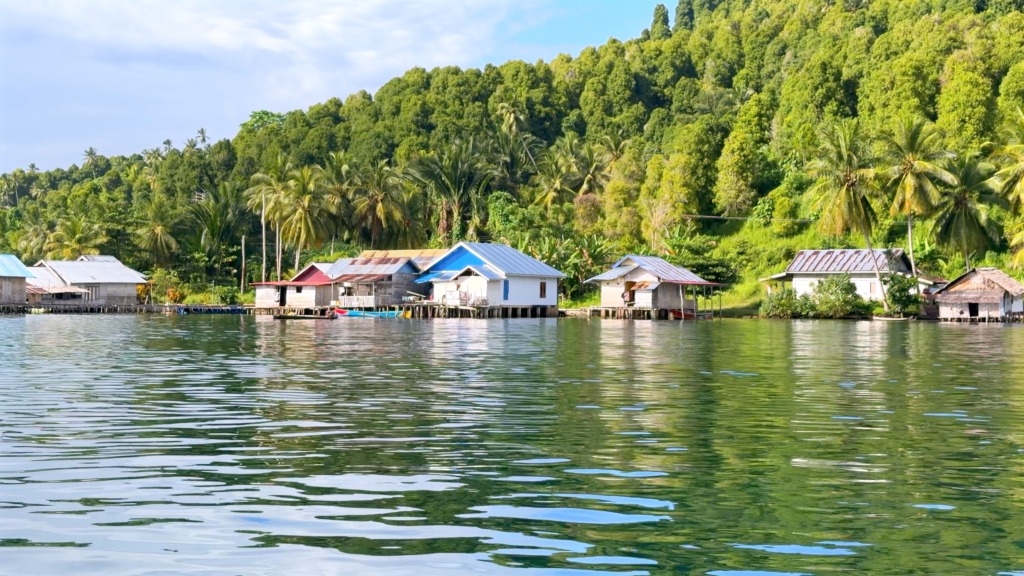
We passed villages and stilt houses before stopping at a quiet beach.
Long Beach became my favourite beach on Banggai Island. At one end, a single palm leaned over the water, creating a simple subject from the ground and air. Darker clouds gathered offshore while the beach caught some sun, giving the photographs more atmosphere than an entirely clear sky.
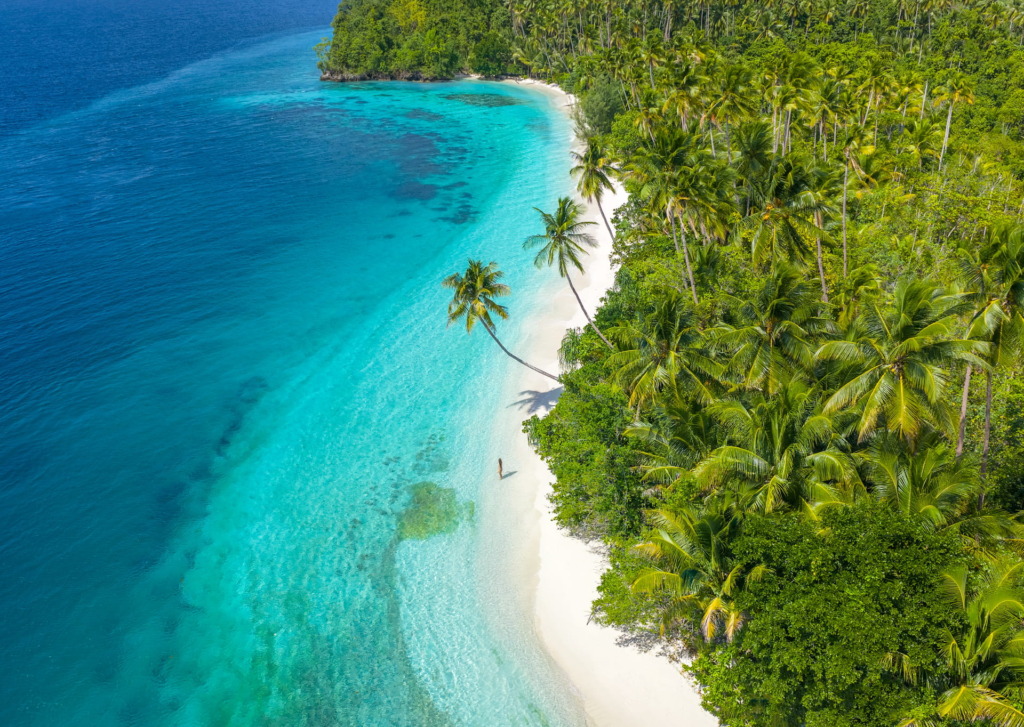
With lunch packed by the homestay, we stayed for a couple of hours.
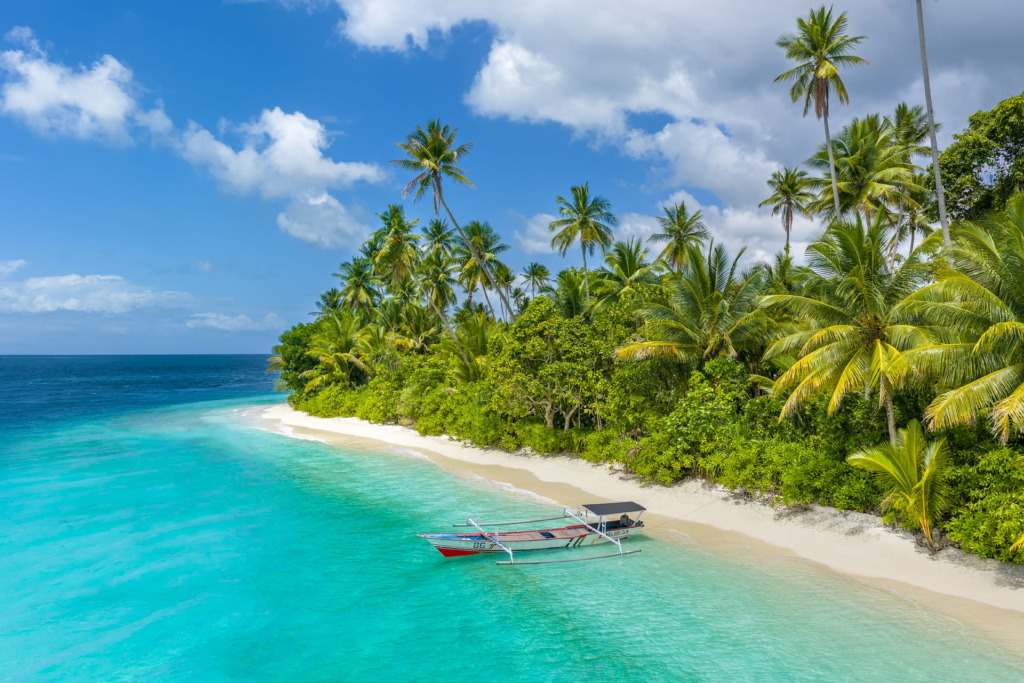
Oyama Beach was cloudier and busier than expected. It was worth seeing, but did not have the same feel for us. Long Beach was the clear highlight of the day.
Later, our host invited us on one of her regular visits to a nearby Bajo village. Children gathered beside the pontoon, sang and danced, and we helped hand out colouring books, pencils and snacks before being invited into several homes.
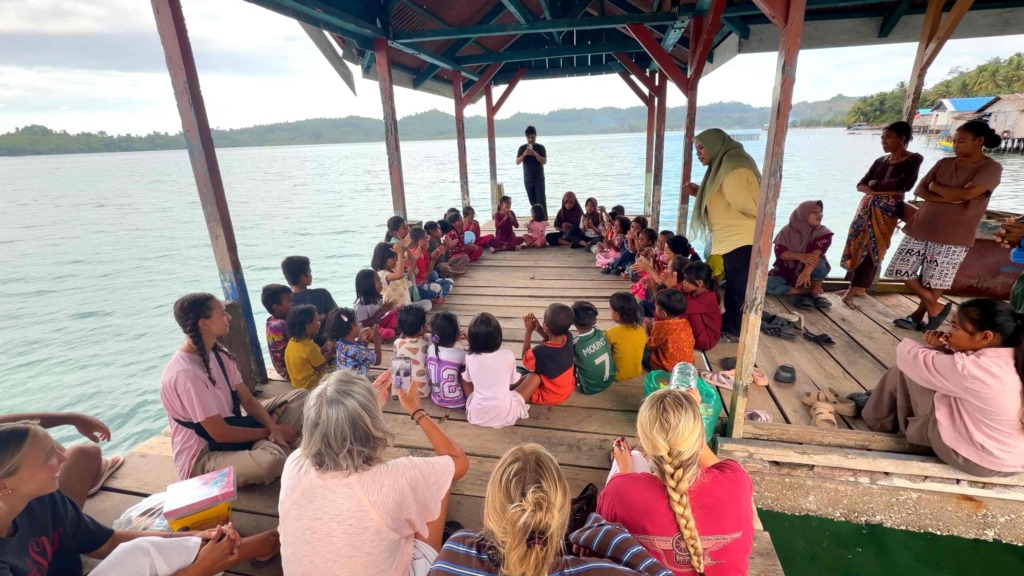
This was a personal visit through someone with existing relationships in the village, not a booked attraction. I would not suggest arriving independently or treating the community as a sightseeing stop.
Day two: Pasir Putih, Tanjung Gundul and Teluk Lalong
The following morning, we hired the scooter and crossed the island towards Pasir Putih. The roads felt easier than the rougher sections of Peleng, and we could stop at an unplanned palm-backed beach along the way.
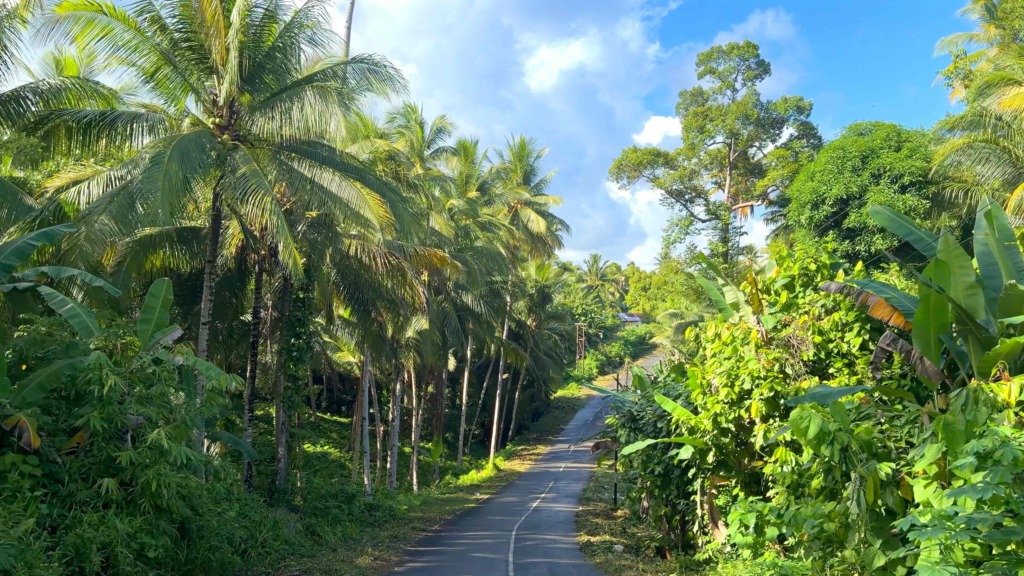
At Pasir Putih, we left the scooter and arranged a small local boat to Tanjung Gundul. During the roughly 15-minute crossing, palm-lined beaches gradually gave way to pale limestone cliffs.
Tanjung Gundul is also known as Batu Lobang, after the large opening through the rock. Smooth white stones covered the shoreline beneath the limestone instead of sand.
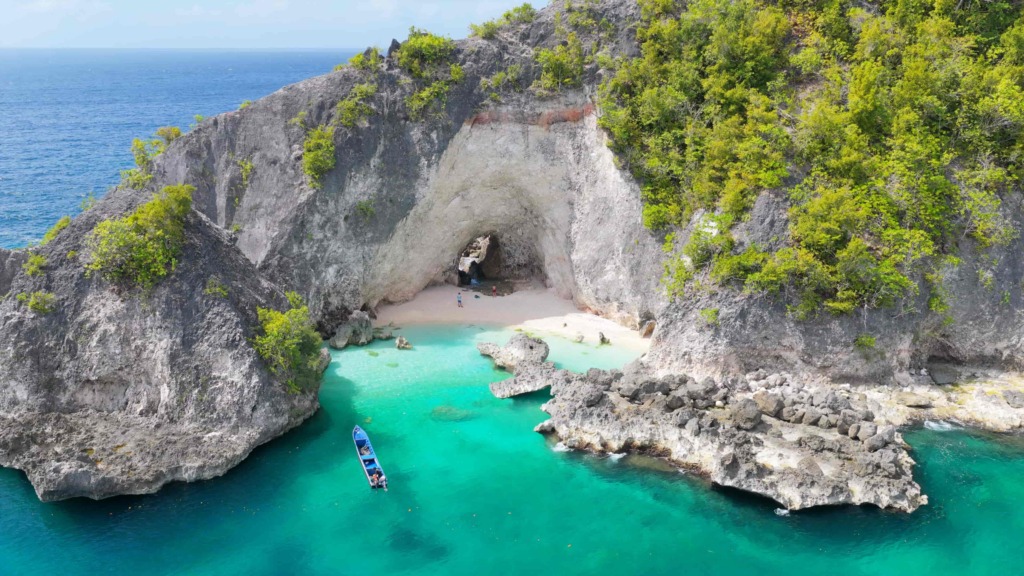
Close to high tide, the sea had covered most of the beach. There was little room to walk, but the white stones, dark opening and blue water produced one of the trip’s most distinctive aerial views. Tide, waves and weather affect access, so ask locally before setting out.
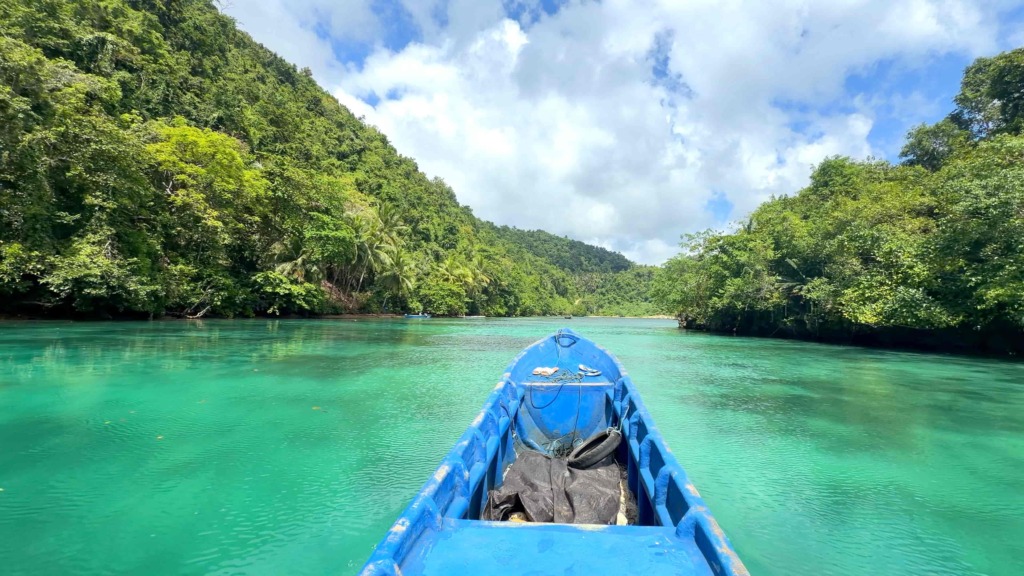
Before returning, our boatman took us into Teluk Lalong, a sheltered saltwater lagoon nearby. The exposed coast gave way to still blue-green water enclosed by thick vegetation, making it a natural addition to the same boat journey.
Back at Kia Homestay, we finished the afternoon snorkelling over the house reef, where the coral appeared particularly varied.
Day three: Banggai town and snorkelling at Pantai Bontolan
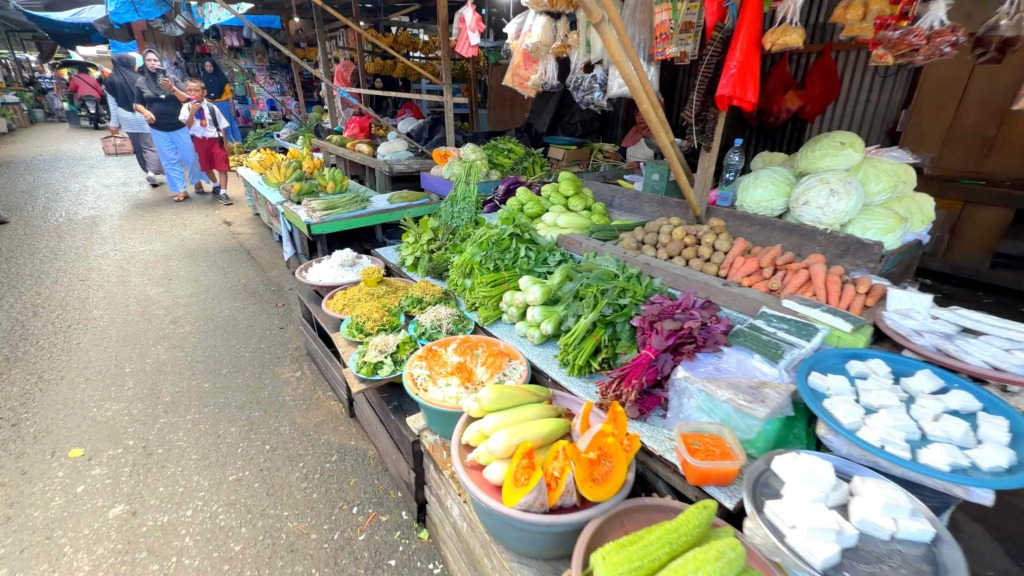
On our third morning, we rode into Banggai town. After brunch and coffee, we walked through the market near the port. Its fresh produce and morning shoppers offered a busier view of island life after two days around beaches and villages.
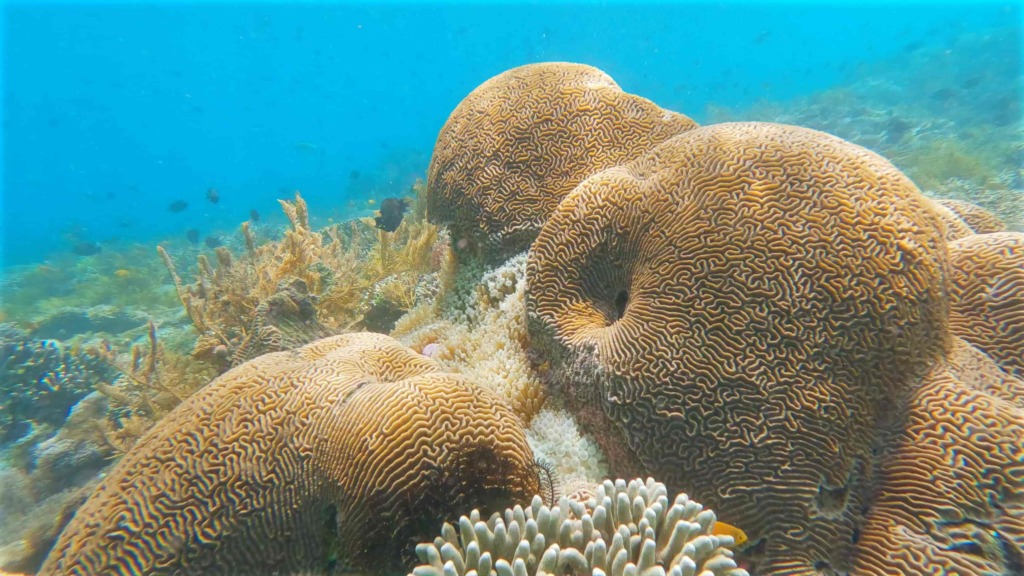
Later, our host recommended Pantai Bontolan, a short journey along the coast. The beach looked unremarkable from shore, but underwater we found coral ridges, plates and branching formations that felt even more varied than the reef outside the homestay.
We also saw several Banggai cardinalfish. A black-and-silver species endemic to the Banggai Archipelago and threatened by aquarium collection and habitat damage.
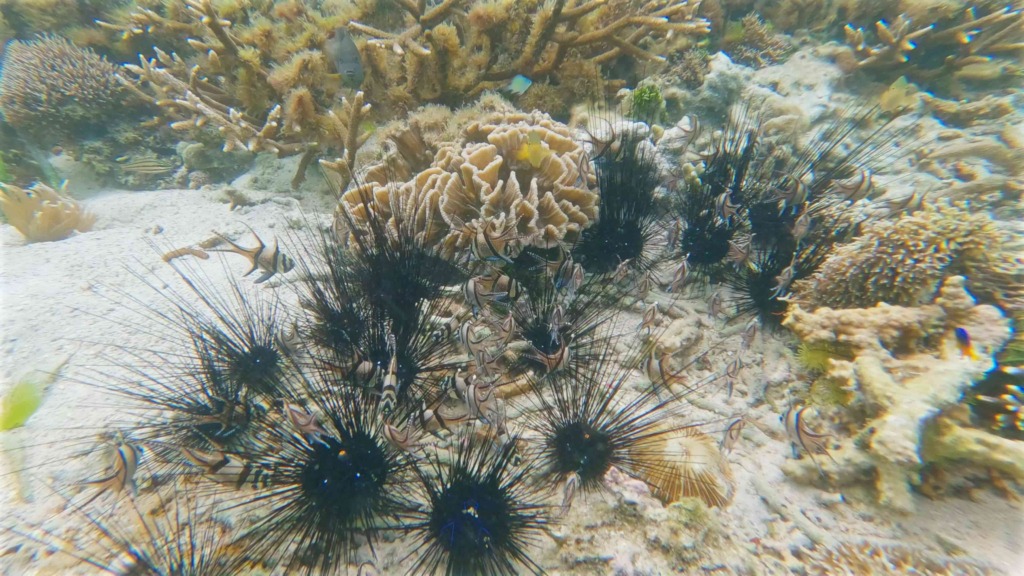
Low-impact snorkelling is particularly important: avoid standing on coral, keep your distance from wildlife and ask locally about currents and boat traffic. Conditions can change, and an easy site during our visit may not always be suitable.
Getting around Banggai Island
We used a scooter for Banggai town, Pasir Putih and shorter journeys. The roads we travelled were easier than the damaged sections on Peleng, although riding somewhere unfamiliar still requires care.
Local boats were the practical option for Long Beach, Oyama, Tanjung Gundul and Teluk Lalong. We arranged them through Kia Homestay or by speaking to a boatman on arrival, with plans depending on local knowledge and conditions.
Fixed prices and departure times published online can quickly become misleading. Ask your accommodation what is currently possible, agree costs before leaving and allow for weather changes.
Ask your host how much cash to bring rather than assuming cards will be accepted. Personal masks and fins also made spontaneous swims easier.
Photography on Banggai Island
Staying beside the water meant sunrise required no journey. Long Beach worked from ground level and the air, while Tanjung Gundul produced the strongest aerial composition. An underwater camera was equally worthwhile at Kia Homestay and Pantai Bontolan.
Weather changed regularly, but darker offshore clouds sometimes made brighter sections of coast more interesting. Check current Indonesian rules and local permissions before flying a drone.
How many days do you need on Banggai Island?
We stayed five nights, but four would probably have been the best balance for this itinerary. That allows three full days for island hopping, Pasir Putih and a slower day around Banggai town and the reefs, plus an arrival evening and some weather flexibility.
Five nights gave us more time to snorkel and photograph several sunrises. A longer stay makes more sense if you plan to explore the surrounding islands rather than remain on Banggai Island.
Is Banggai Island worth visiting?
For us, yes.
It does not offer the polished infrastructure or effortless transport of Indonesia’s better-known islands. Accommodation is simple, journeys are arranged informally and weather can change a boat day.
What it offered instead was freedom: hiring a scooter, arranging a small boat locally, swimming over reefs near our room and spending hours on a quiet beach.
Long Beach and Tanjung Gundul were the strongest locations; Pantai Bontolan and the Kia reef were the underwater highlights. Just as memorable was the welcome: people waved as we passed, children offered high fives and our host made experiences possible that would have been difficult alone.
Banggai Island will suit travellers who are comfortable with simple conditions and flexible plans. If that sounds appealing, it is worth continuing beyond Peleng rather than treating the journey across the Banggai Islands as finished at Paisu Pok.
You can see more photographs from this journey in my Indonesia gallery, or browse my other photography location guides.
Frequently asked questions
Is Banggai Island the same as Peleng Island?
No. Peleng is the largest island in the wider Banggai archipelago and lies to the north. Banggai Island is a separate island within Banggai Laut Regency.
How many nights should you spend on Banggai Island?
I would allow around four nights, giving you three full days to explore. We stayed for five nights, which provided more time for weather changes, snorkelling and slower mornings around the homestay.
Can you explore Banggai Island without a formal tour?
We did not join a formal tour, but we relied heavily on Kia Homestay and local boatmen to arrange transport. That local help made the trip considerably easier.
Can you snorkel from the shore?
Yes. We snorkelled directly from Kia Homestay and from Pantai Bontolan. Check conditions locally, use appropriate equipment and avoid touching or standing on coral.
What were our favourite places on Banggai Island?
Long Beach was our favourite conventional beach, while Tanjung Gundul was the most unusual coastal location. Pantai Bontolan and the house reef at Kia Homestay were our best snorkelling experiences.