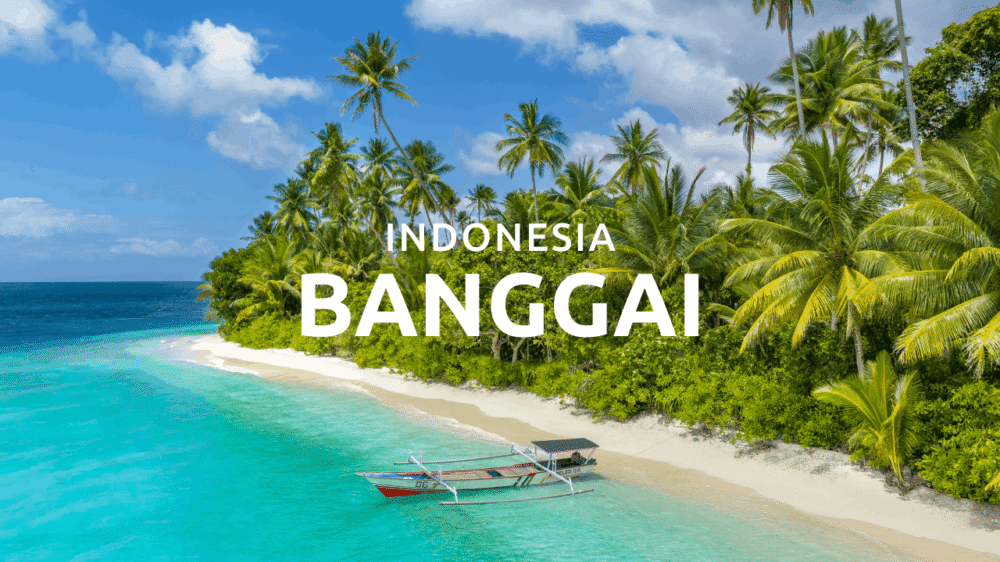
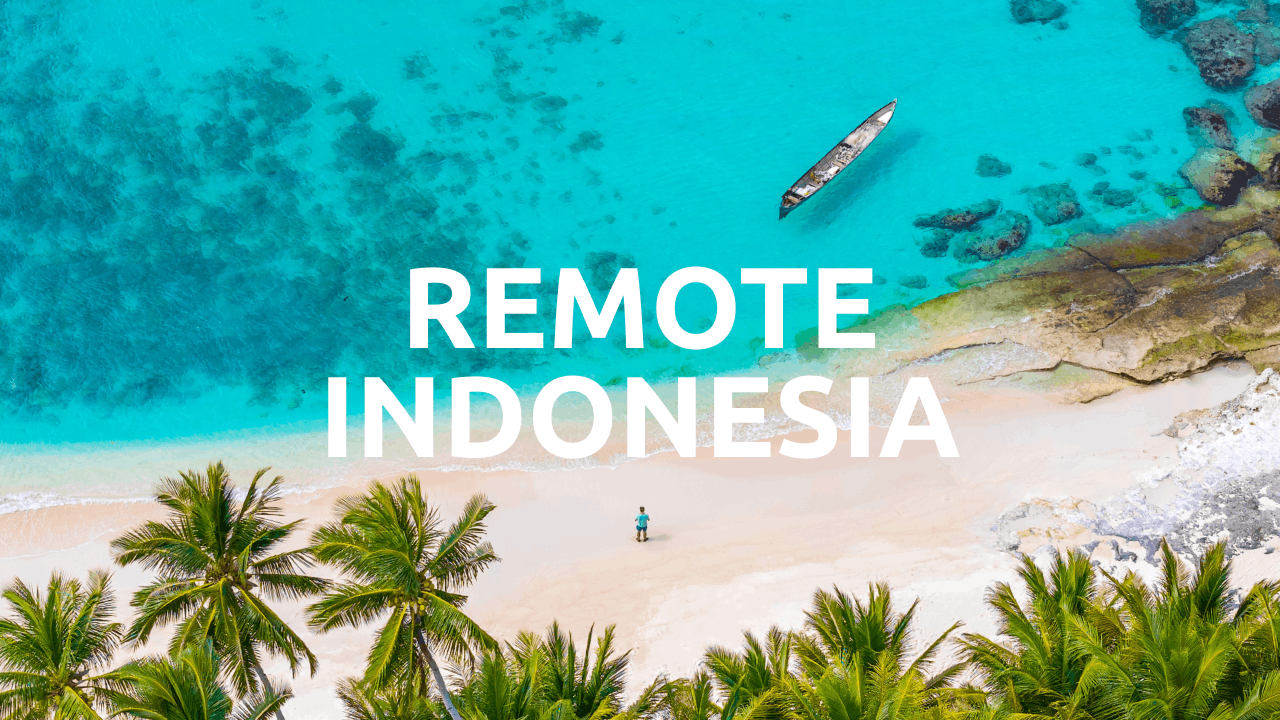
After spending four nights in Luk Panenteng exploring Paisu Pok and the surrounding area, the next part of our journey took us right across Peleng Island and eventually over to Banggai Island.
On the map, this looked mostly like a transfer between two parts of the trip. In reality, it became one of our favourite days in the Banggai Islands.
Rather than travelling directly, we broke the journey up with caves, beaches, small coastal villages and local boat trips – gradually making our way east across Peleng before taking a speedboat to our accommodation on Banggai Island.
Leaving Paisu Pok and Luk Panenteng
We started the journey in Luk Panenteng, the small village beside Paisu Pok where we had spent the previous four nights.
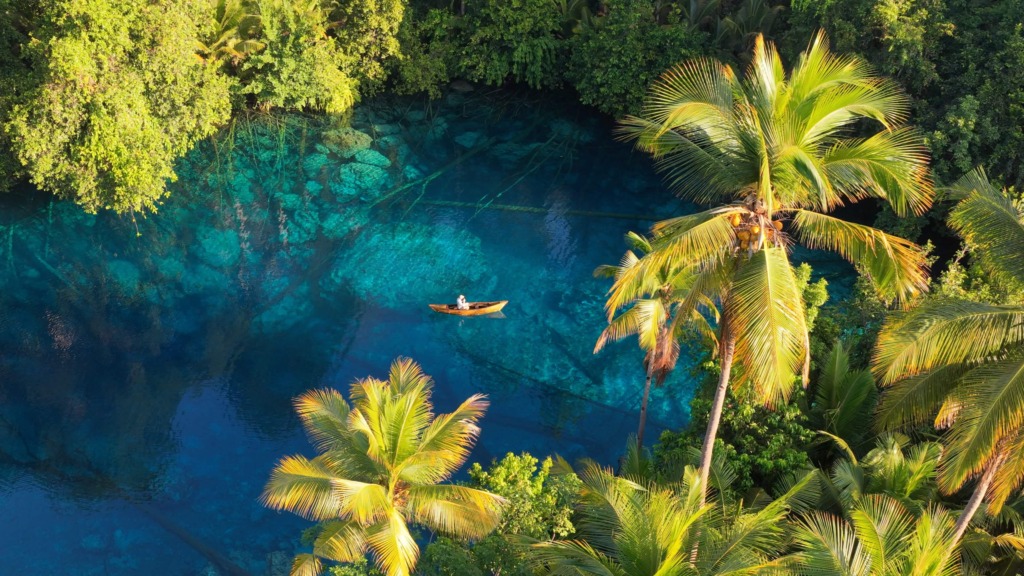
After the slower pace of the lake, it felt like a natural point in the trip to start moving again. Our first destination was Salakan, the main town on Peleng Island, but there were several places worth stopping at along the way.
The roads across Peleng can be fairly slow in places, so it is worth allowing plenty of time rather than treating the journey simply as transport from A to B.
Swimming at Ba’banang Cave
One of our first stops was Ba’banang Cave.
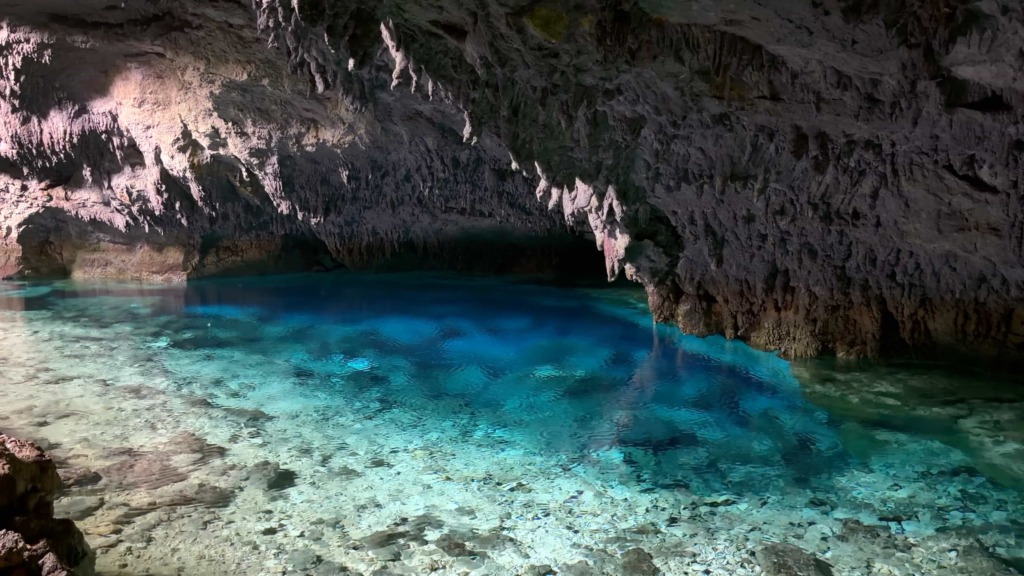
A short walk from the road leads into the cave and a surprisingly deep pool of very clear blue water. We only stayed briefly, but there was enough time for a swim and some underwater filming before carrying on towards Salakan.
It was another example of how many interesting places around Peleng sit just off the main route.
Arriving in Salakan
After several days staying in a small village, Salakan felt considerably busier.
There were more shops, restaurants and accommodation options, and for us it was also a useful place to reset before continuing towards the quieter parts of the island.
That evening we drove into the hills above town to a café overlooking Salakan and the bay.
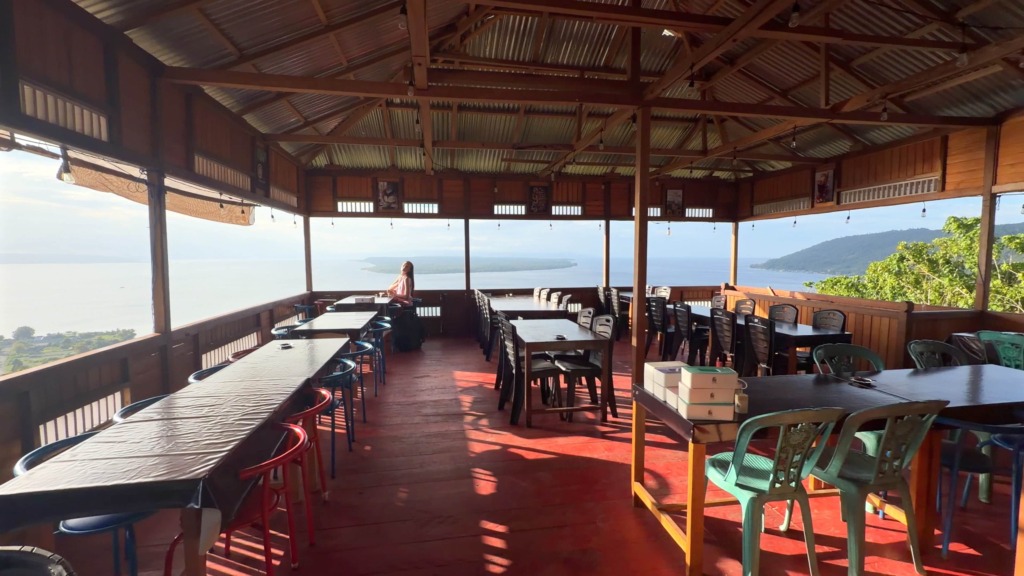
We arrived in time for sunset and stayed for dinner. After eating fairly similar meals over the previous few days, having a wider choice on the menu was particularly welcome.
Bone Pompon and Peleng’s Northern Coast
The following morning we began another full day of travelling east.
Our first stop was Bone Pompon on Peleng’s northern coastline.
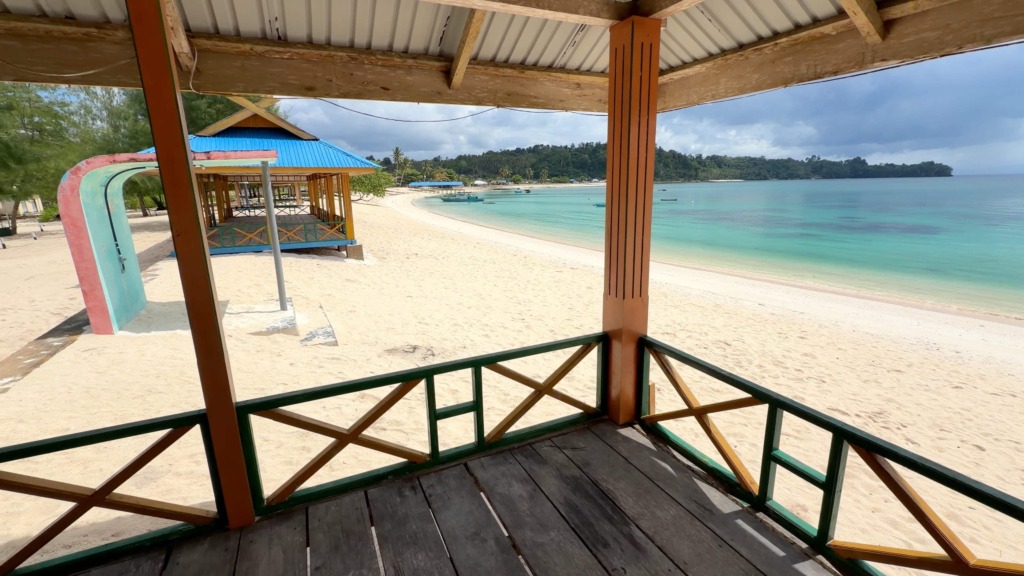
Rather than staying only at the main beach, we found a local boat owner who took us to some smaller beaches nearby.
There was no complicated booking process – we simply arranged it once we arrived.
That became something of a recurring theme during our time in the Banggai Islands. Some of the easiest transport arrangements came from speaking to people locally rather than trying to organise every detail before the trip.
From Bone Pompon we continued east.
For long stretches, the road passed through dense coconut groves, with palms covering huge areas of the landscape.
It was one of my favourite drives on Peleng.
Mandel Beach
Our main stop that day was Mandel Beach.
Of all the beaches we visited on Peleng, this was probably closest to what I had imagined before travelling to this part of Indonesia.
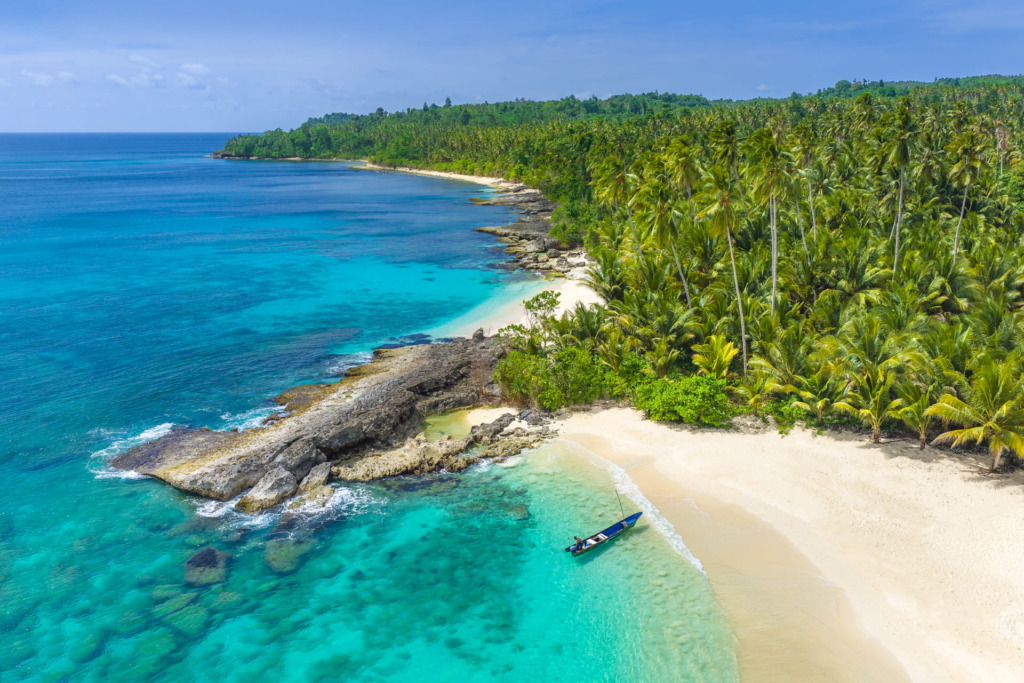
There was a long stretch of pale sand, clear blue water and coconut palms running along the coastline.
What I particularly liked, though, was that it still had a very local feel.
We only saw a handful of other visitors during the afternoon. Much of the activity came from fishermen working along the shoreline, bringing in their catch or heading out in small boats.
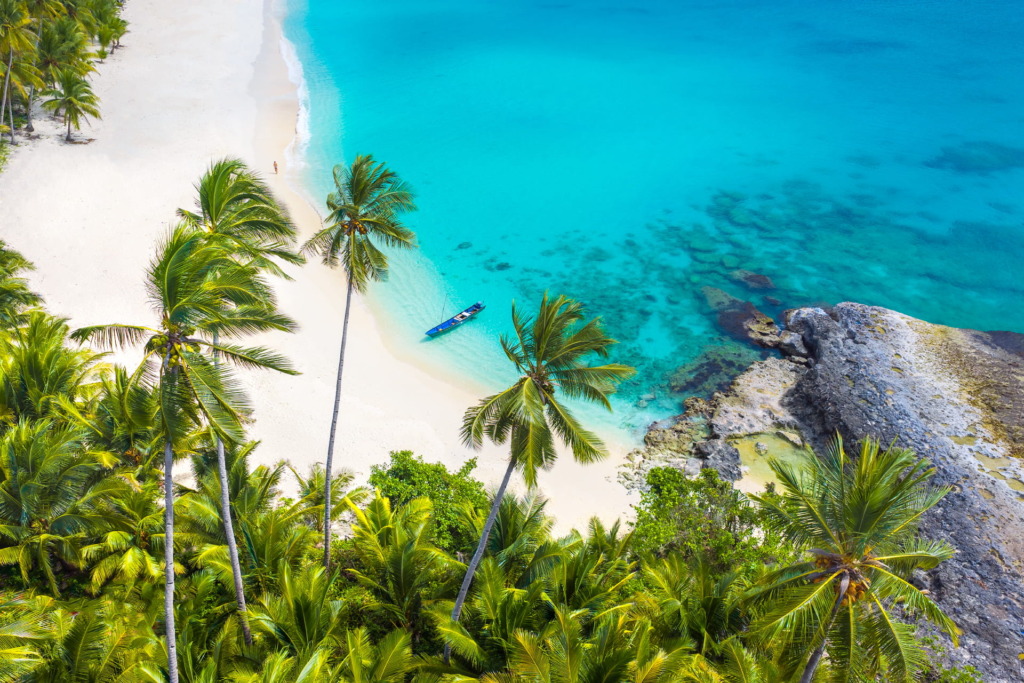
There were a few simple places selling noodles, coffee and cold drinks, along with umbrellas and seats beside the beach.
We ended up spending much of the afternoon here – swimming, walking along the coast and flying the drone.
We were also fortunate with the weather. With only one day available to explore this stretch of Peleng, having clear skies and sunshine made a big difference.
Continuing Towards Banggai Island
Further along the coast, we made one final short stop at Pantai Pasir Panjang Desa Abason.
We did not stay long. With sunset approaching, we were keen to reach our homestay on Banggai Island while there was still some light left.
By late afternoon we reached the small coastal village where our boat was waiting.
Rather than travelling from the larger port at Tobing and arriving in Banggai town, our driver had helped arrange a small speedboat that could take us directly to our accommodation.
As we boarded, what felt like half the village came down to smile and wave us off.
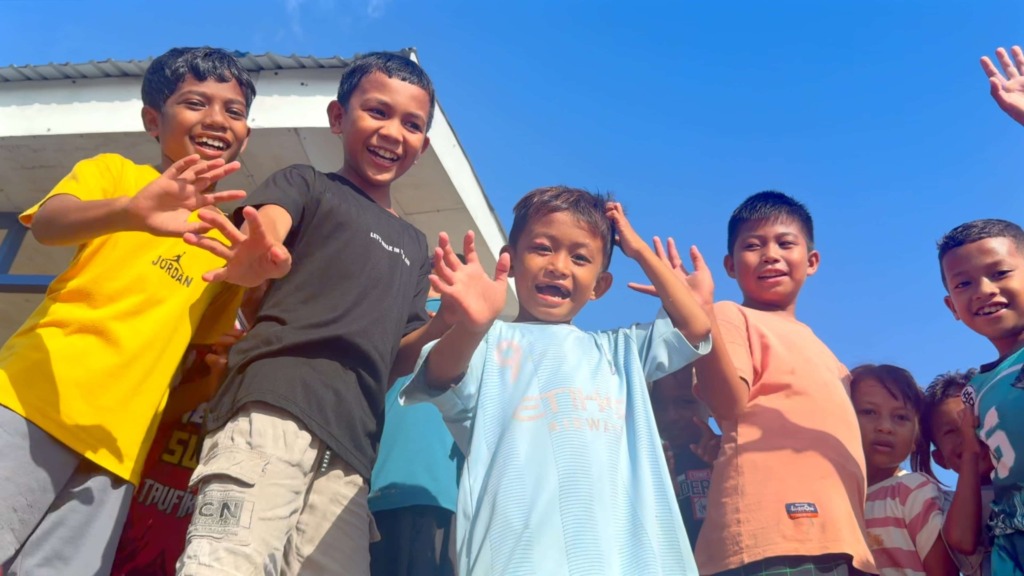
It was a wonderfully warm farewell to Peleng.
Staying at Kia Homestay
The boat took us directly to Kia Homestay, where we would spend the next five nights.
The accommodation itself was fairly simple, but the setting was even better than we had expected.
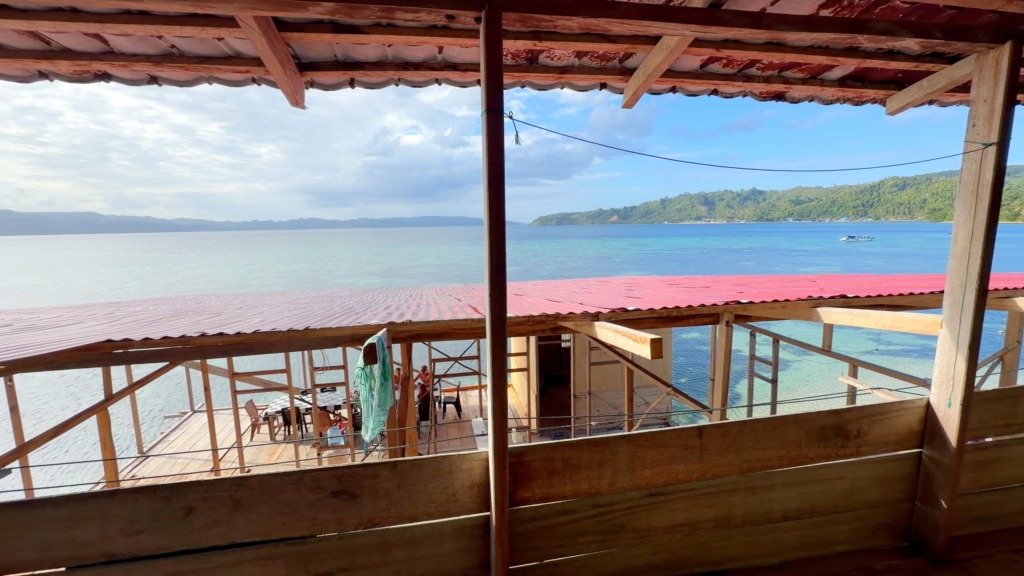
Our room was built directly over the water – technically giving us an overwater stay, just without the Maldives price tag.
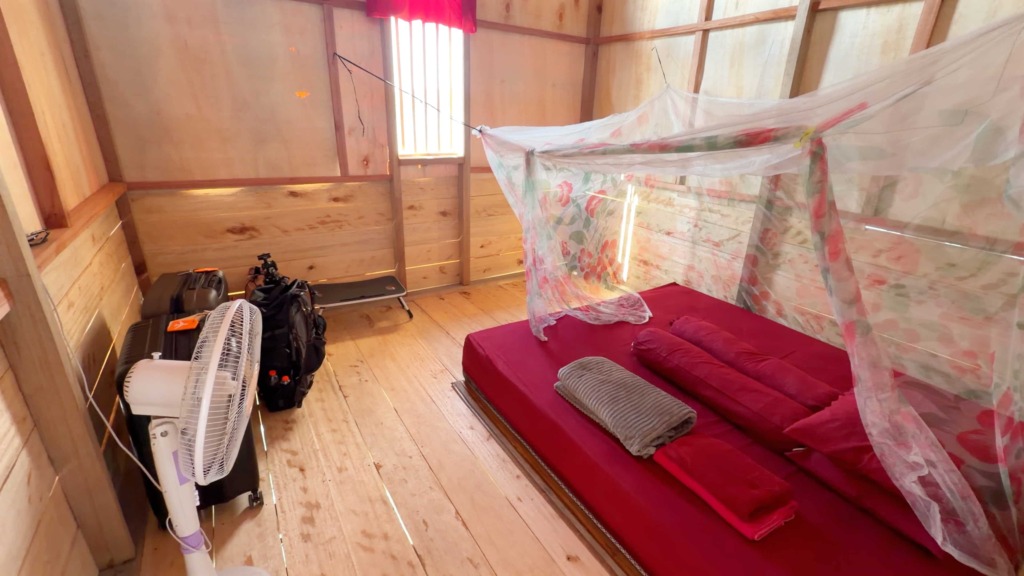
After dropping off our bags, we walked through the surrounding village.
Almost everyone we passed seemed to say hello, and we eventually found somewhere to buy a cold drink and spend some time relaxing in the late-afternoon sun.
The whole area immediately felt peaceful.
For sunset, we walked down to a nearby beach.
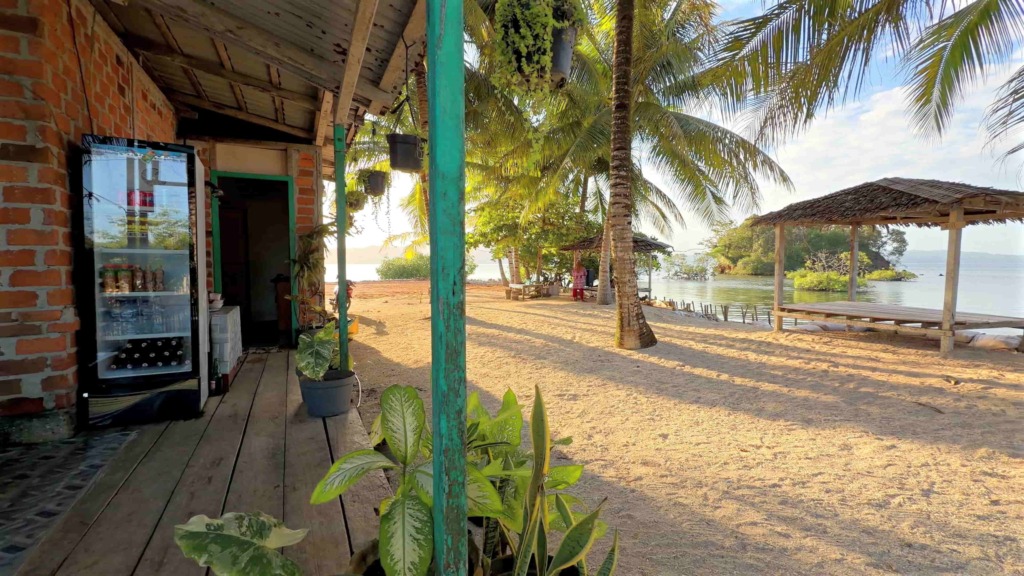
After a full day of roads, boats and beaches, sitting beside the water as the light disappeared felt like a particularly good way to finish the journey.
Is It Worth Travelling Slowly Across Peleng?
For us, definitely.
It would have been possible to treat this section largely as a transfer towards Banggai Island, but breaking the journey up made it considerably more interesting.
Ba’banang Cave, Bone Pompon and Mandel Beach were all worthwhile stops, but some of my favourite memories came from the journey itself – driving through the coconut groves, arranging boats locally and arriving in small villages that receive relatively few international visitors.
If you are travelling through the Banggai Islands, I would avoid rushing this section of the route if your itinerary allows it.
The next stage of our trip took us further around Banggai Island itself, exploring by boat, snorkelling and spending more time around the local villages.