

Indonesia is made up of thousands of islands, but from the outside, the country is often reduced to a relatively small number of familiar destinations.
For this trip, we travelled further east, beyond the usual routes and into Sulawesi and the Banggai Islands. Our first destination was the small village of Luk Panenteng on Peleng Island, home to one of the clearest and most unusual lakes we have visited: Danau Paisu Pok.
Paisu Pok Lake had been one of the main reasons for planning this journey. I had seen photographs of its deep blue water and submerged trees before travelling, but places that look this striking online can sometimes feel slightly different in person.
In this case, the photographs were not exaggerating it.
Where is Paisu Pok Lake?
Paisu Pok Lake is beside the village of Luk Panenteng on Peleng Island, within the Banggai Islands of Central Sulawesi.
It is a long way from the better-known parts of Indonesia. The distance and limited infrastructure make reaching it more complicated, but they are also a large part of why the surrounding area still feels so quiet.
Luk Panenteng makes the most convenient base for visiting the lake. From our accommodation beside the bay, it was only around a ten-minute walk through the village.
Paisu Pok Lake at a glance
| Location | Luk Panenteng, Peleng Island |
| Region | Banggai Islands, Central Sulawesi |
| Main arrival point | Luwuk |
| Best base | A homestay in Luk Panenteng |
| Activities | Swimming, snorkelling, paddleboarding and wooden boat trips |
| Best for photography | Quiet mornings and periods of direct sunlight |
| What to expect | Basic accommodation and limited tourism infrastructure |
How we travelled to Peleng Island
Getting to our starting point took several flights and a final boat journey.
We travelled from London through Singapore and Jakarta, staying overnight near the airport before continuing to Makassar and then Luwuk in Central Sulawesi.
The usual route from Luwuk to Luk Panenteng
The normal route is to fly into Luwuk Airport, take a taxi for roughly 30 minutes into the city and continue to the harbour. From there, the public ferry travels to Leme-Leme on Peleng Island. On arrival, your homestay may be able to arrange a pickup, or you can organise a local taxi for the journey to Luk Panenteng, which takes around an hour.
Ferry times can change, so confirm the current departure directly with your accommodation before travelling. During our visit, the daily public ferry was due to leave at around 2pm.
Our original plan had been to catch that ferry from Luwuk, but a delayed flight meant we arrived too late. We contacted Heppy Homestay, who helped us arrange a private boat transfer from a harbour close to Luwuk Airport.
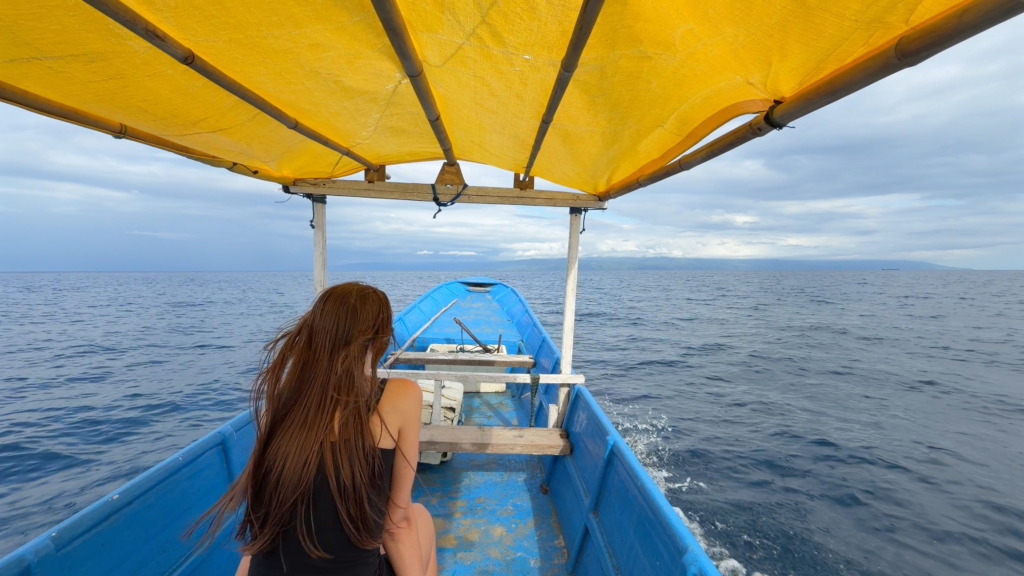
Although it was an unexpected change, the boat worked well. After several airports and connections, travelling across the water felt like the point at which the pace of the journey finally began to slow.
Visitors relying on public transport should check the latest boat arrangements directly with their accommodation. Services and departure times can change, and the limited connections leave relatively little room for flight delays.
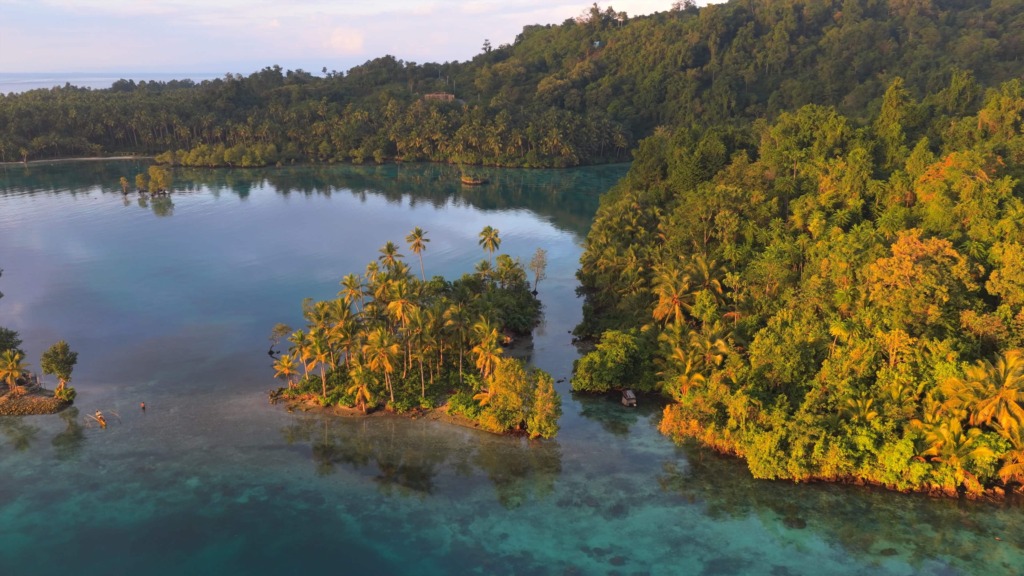
By the time we reached Luk Panenteng, it was already getting late. We spent the first evening walking around the village, eating at our accommodation and recovering from the journey.
Paisu Pok was waiting for us the following morning.
Our first morning at Paisu Pok Lake
We left the homestay early and walked to the lake while the village was still quiet.
From the edge of Paisu Pok, it was immediately possible to see why the lake had become so well known. The water was remarkably clear, with a deep blue colour that changed depending on the direction of the light.
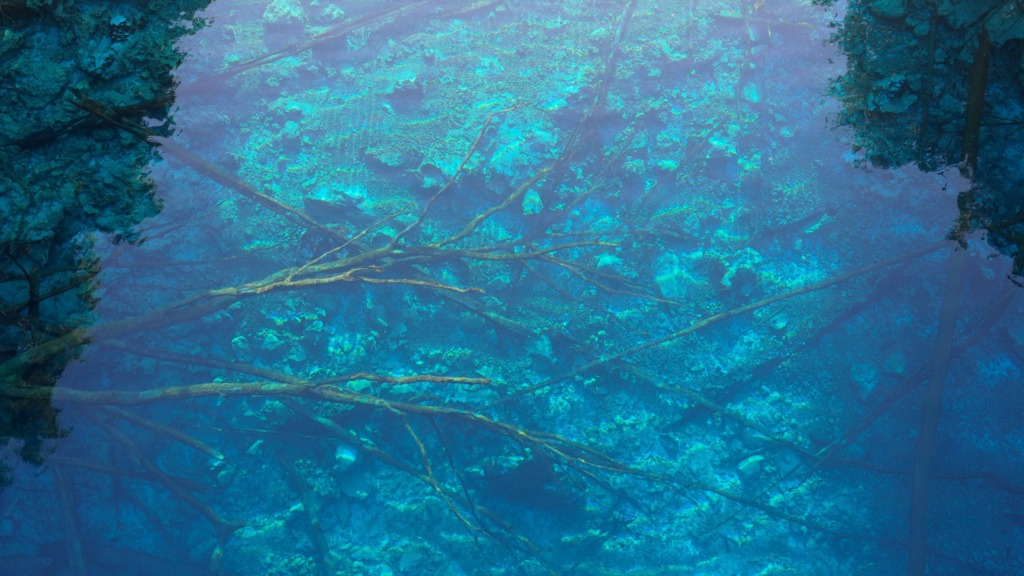
Fallen tree trunks, rocks and vegetation were clearly visible beneath the surface. In the darker sections, the lake bed appeared to drop away below us.
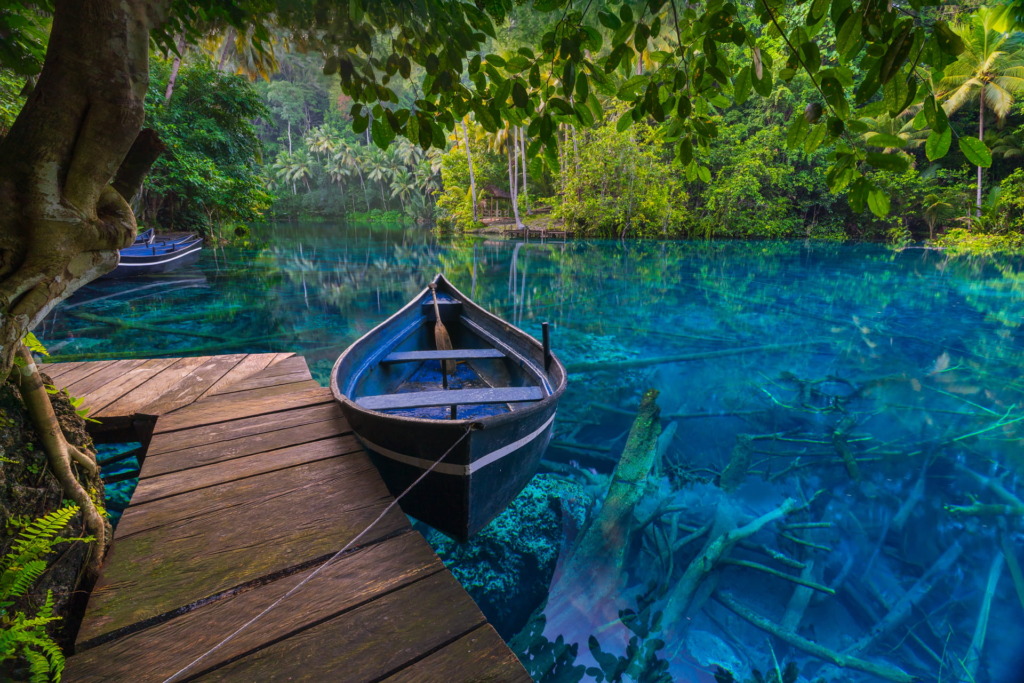
The first light initially caught the surrounding trees before gradually reaching the water. As the sun rose, the reflections became stronger and the blue became more vivid.
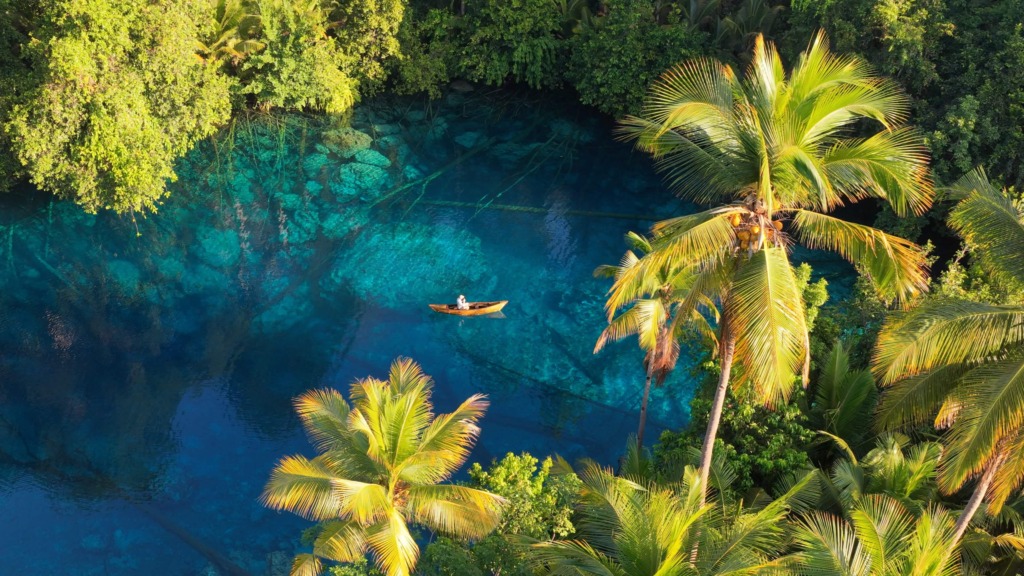
After the long journey, this was the first moment when arriving somewhere so remote felt completely worthwhile.
Swimming and paddleboarding at Paisu Pok
We returned later in the day to spend more time on and beneath the water.
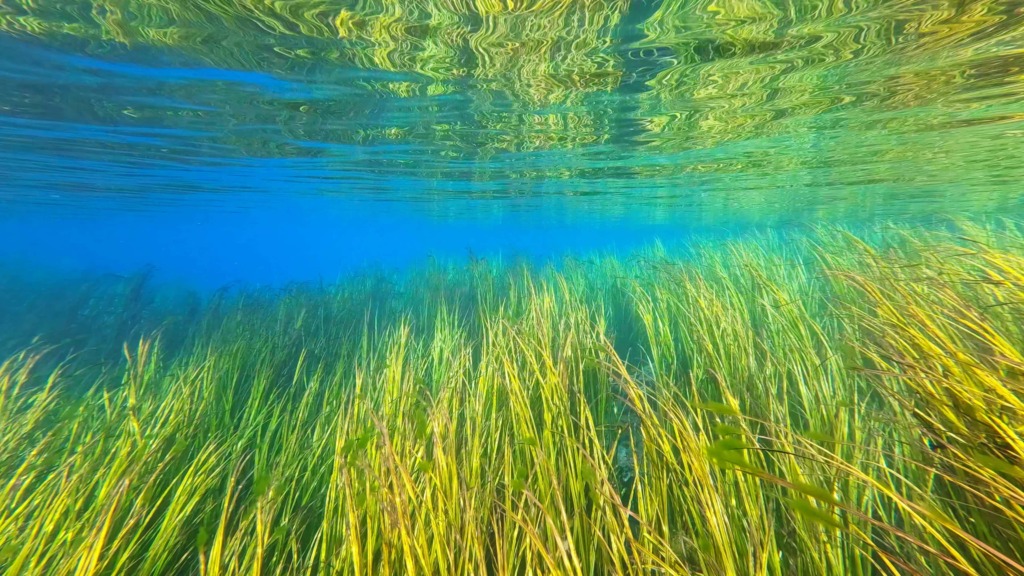
Swimming in Paisu Pok felt quite different from snorkelling on a tropical reef. There was very little movement or noise. Instead, we floated above submerged branches, reeds and fallen trees in water clear enough to see far below us.
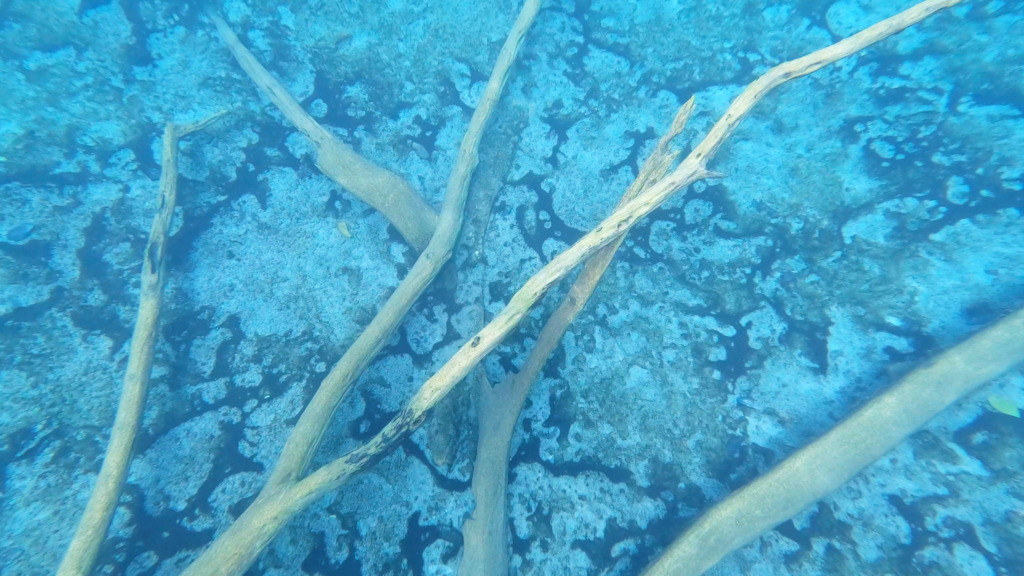
Small wooden boats and paddleboards were available beside the lake, allowing us to explore beyond the main entry point.
Paisu Pok is exceptionally clear, and it is important to help keep it that way. Before swimming, be mindful of sunscreen, insect repellent and other products that can wash into the water. Use as little as practical, avoid washing with soaps in or beside the lake, and follow any guidance given locally.

We spent several hours swimming, filming underwater and watching the appearance of the lake change as the sun moved. It is worth allowing enough time for this rather than treating Paisu Pok as a quick photo stop.
Its colour is certainly the first thing that attracts attention, but the stillness of the lake was equally memorable.
Photographing Paisu Pok Lake
From a photography point of view, returning on more than one occasion was important.
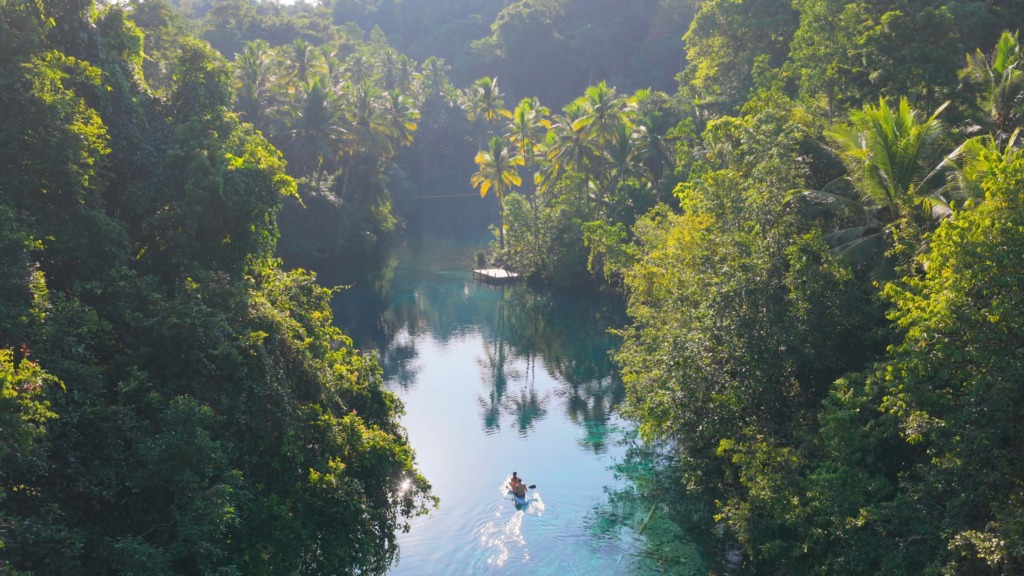
Conditions at Paisu Pok can look very different depending on the light. Early in the morning, we found calmer water, fewer visitors and better reflections. As direct sunlight began reaching the trees and lake, warmer tones appeared around the edges and contrasted with the blue water.
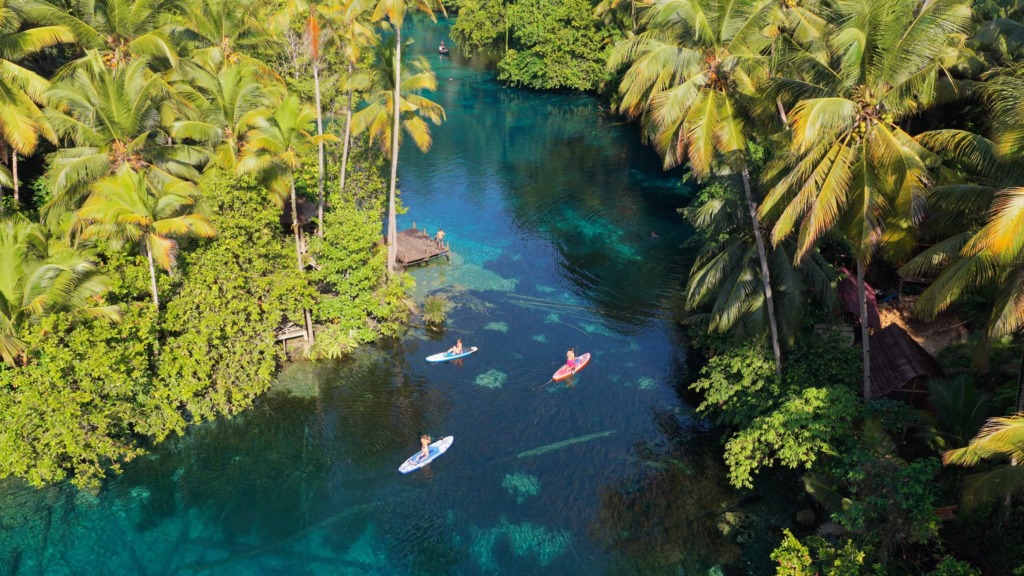
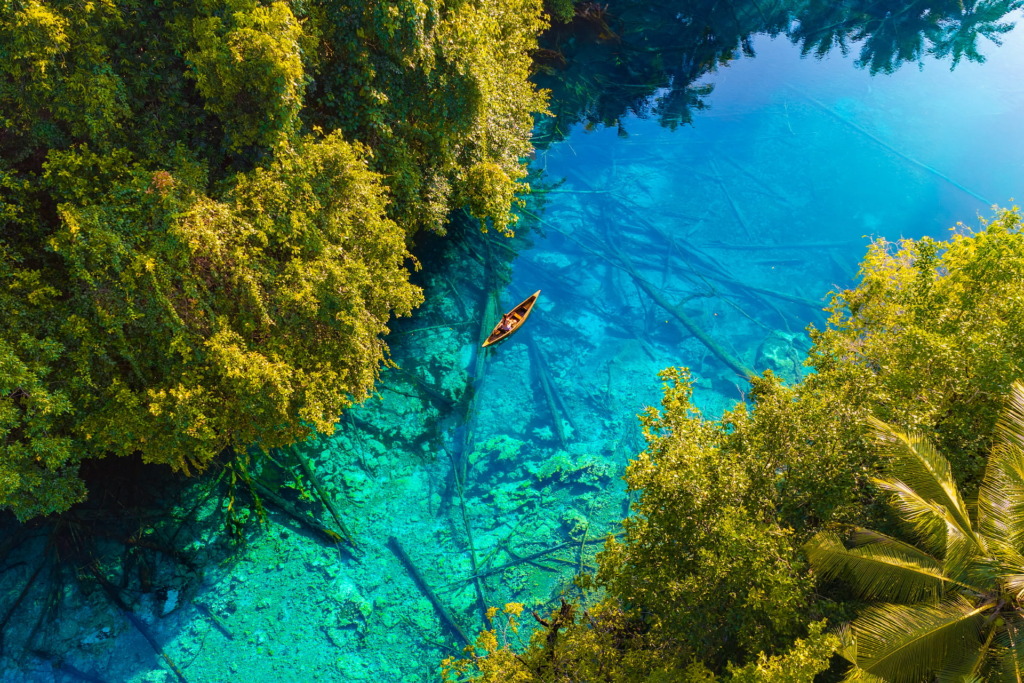
One of my favourite moments came when Rebecca took one of the wooden boats onto the lake. From above, the boat, the submerged trees and the shadows beneath the water formed a simple composition.
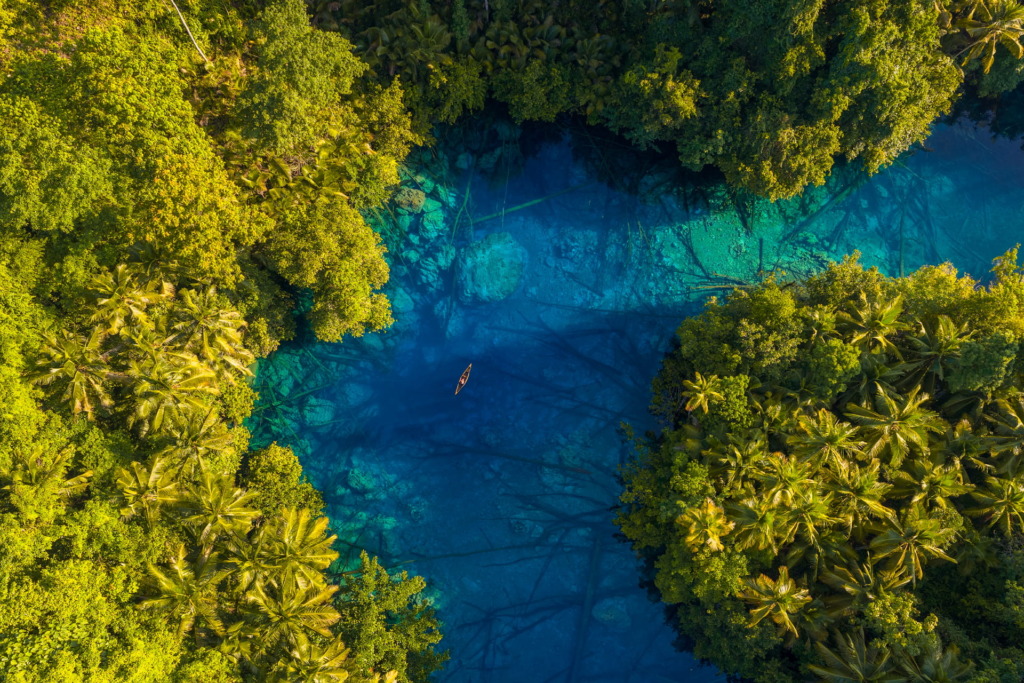
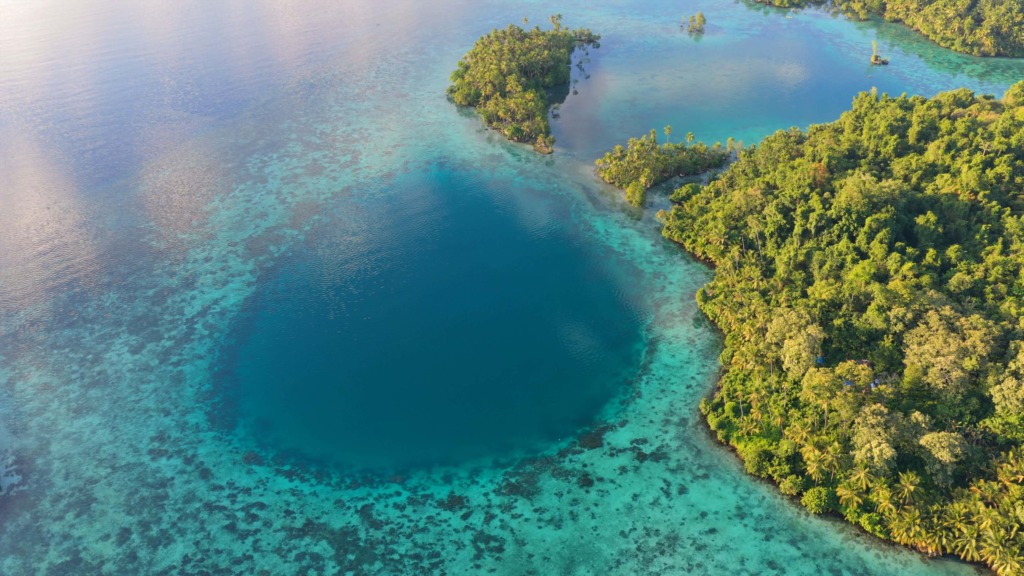
The drone also revealed the shape of the lake more clearly than was possible from its banks. Different patches of blue and green appeared where the depth, vegetation and angle of the light changed.
For the best balance of quiet conditions and vivid colour, I would arrive early and remain as the sun begins reaching more of the water. A brighter period later in the morning may bring out more of the blue, while the earliest light is generally better for reflections and atmosphere.
We visited in early June. From what we read beforehand and learned locally, there does not appear to be one definitive best season for Paisu Pok, and the information online can be conflicting. Conditions can vary, so it is worth checking recent local information before fixing your dates.
Drone rules and local permissions can change, so check the current requirements before flying.
Staying in Luk Panenteng
Accommodation around Paisu Pok is simple.
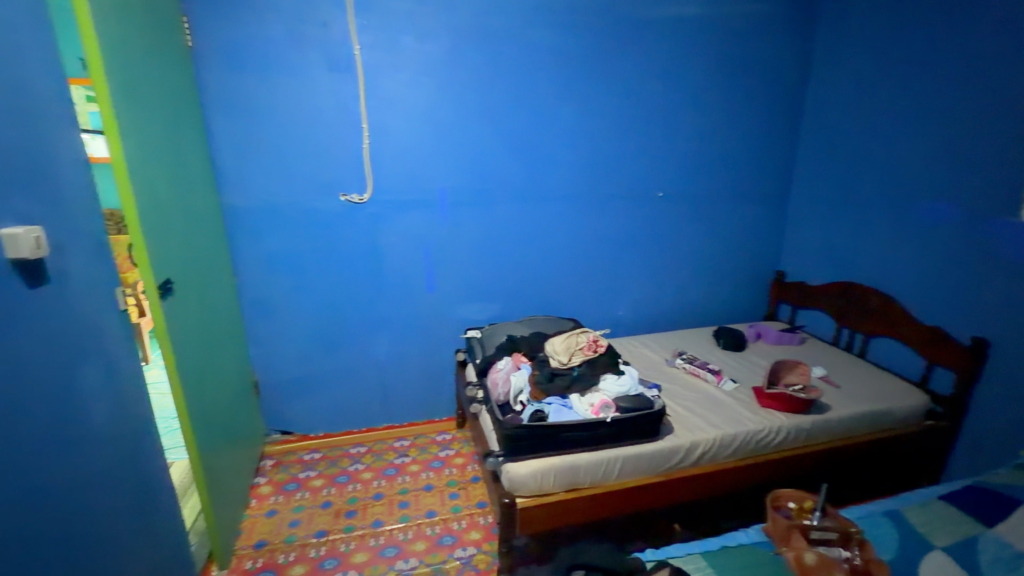
This is not an area with large resorts or polished tourist infrastructure. Our homestay was basic, but it provided what we needed and placed us close enough to visit the lake several times without rushing.
We stayed at Heppy Homestay, which we found through Google Maps. The listing included a WhatsApp number, so we contacted the host and arranged the stay directly.
We had our own room, with shared shower and toilet facilities. Meals were home-cooked and served with the other guests, which added to the communal feel of staying there. The homestay also had a good internet connection available for a small daily fee.
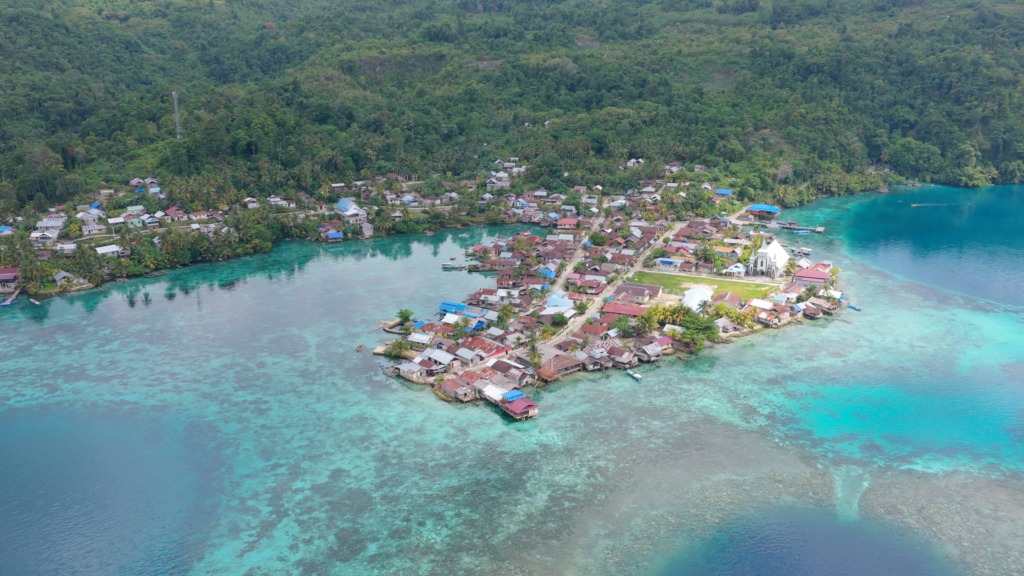
The setting was one of its strongest features. It stood beside Luk Panenteng Bay, with a small veranda overlooking the water. Boats moved in and out of the village while fishing huts, palm trees and patches of reef followed the coastline.
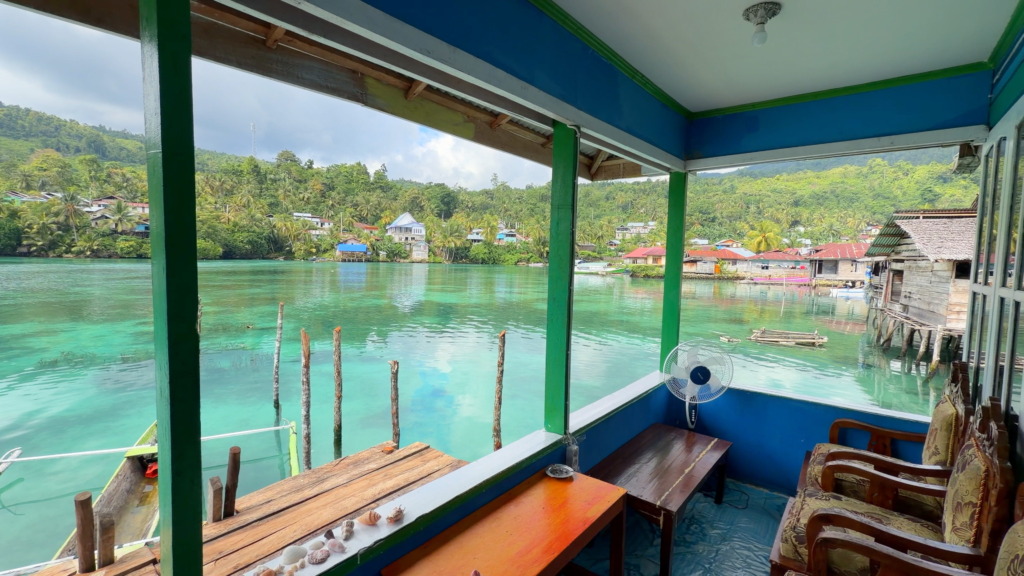
Some of my favourite moments were not connected to a major attraction. They were the quiet periods between trips: breakfast after sunrise, watching the light fade over the bay or seeing the village slowly wake in the morning.
Staying locally also gave us enough time to notice more of the surrounding landscape rather than arriving solely for Paisu Pok and immediately leaving again.
Things to do near Paisu Pok Lake
Although the lake is the best-known place in this part of Peleng Island, it is not the only reason to stay in Luk Panenteng.
Visit Mandel Beach
We rented a scooter and followed the coast towards Mandel Beach.
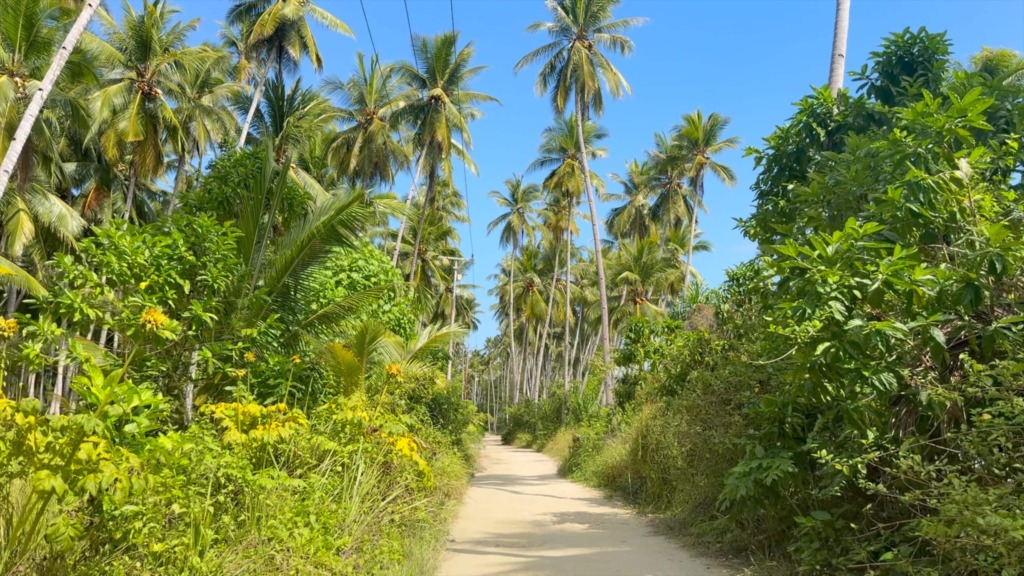
The roads were rough and heavily potholed in places, so the journey required patience. Once there, we found a long stretch of sand, calm water, palm trees and very few other visitors.
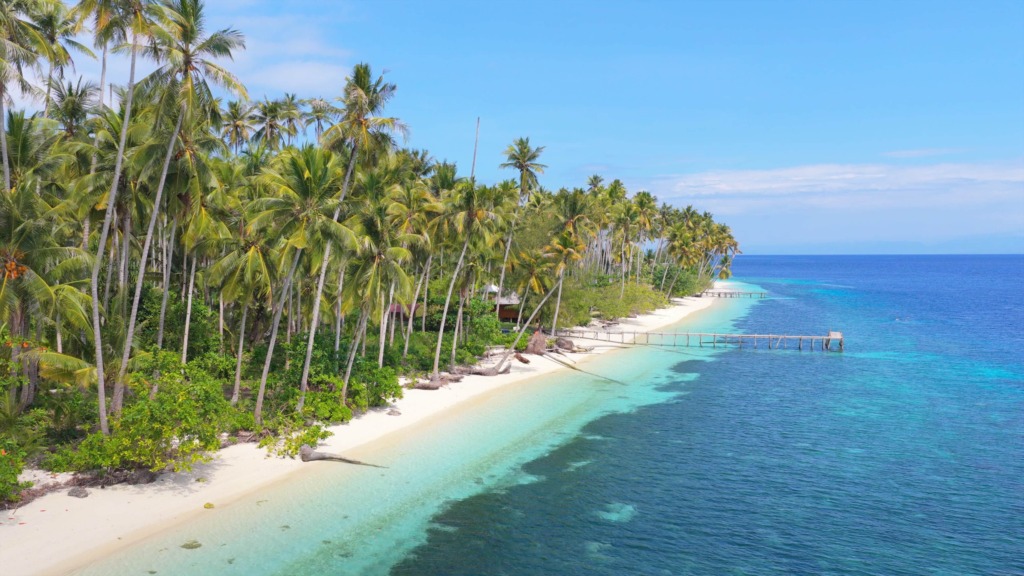
There were a few simple huts and somewhere to buy a drink or food, but otherwise the beach felt undeveloped.
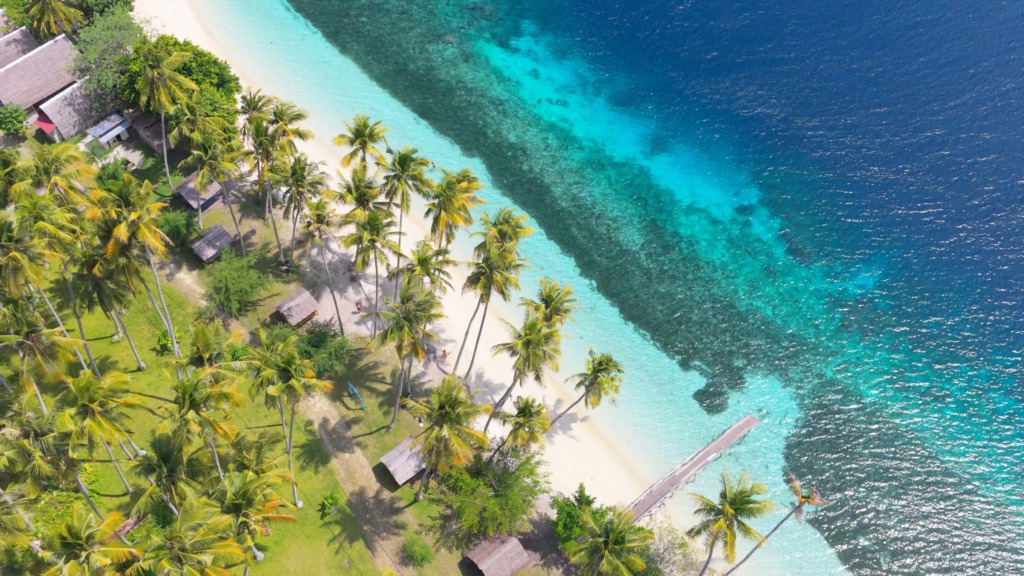
It made a worthwhile change from the enclosed, forested setting of the lake.
Paddle across Kuwala Bay
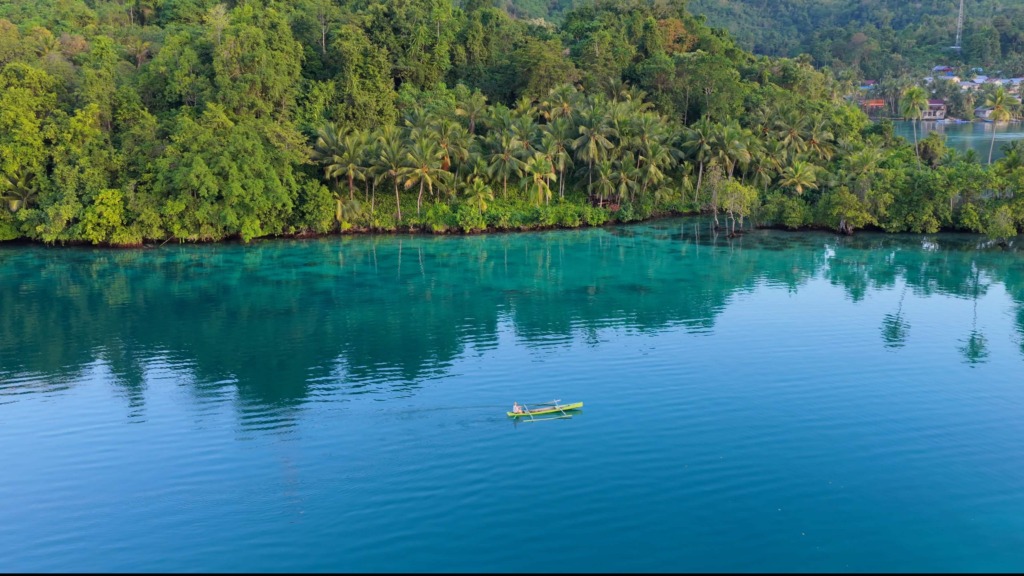
Our accommodation had a small traditional-style boat with stabilisers on either side. On a calm morning, we paddled from the village towards Kuwala Bay.
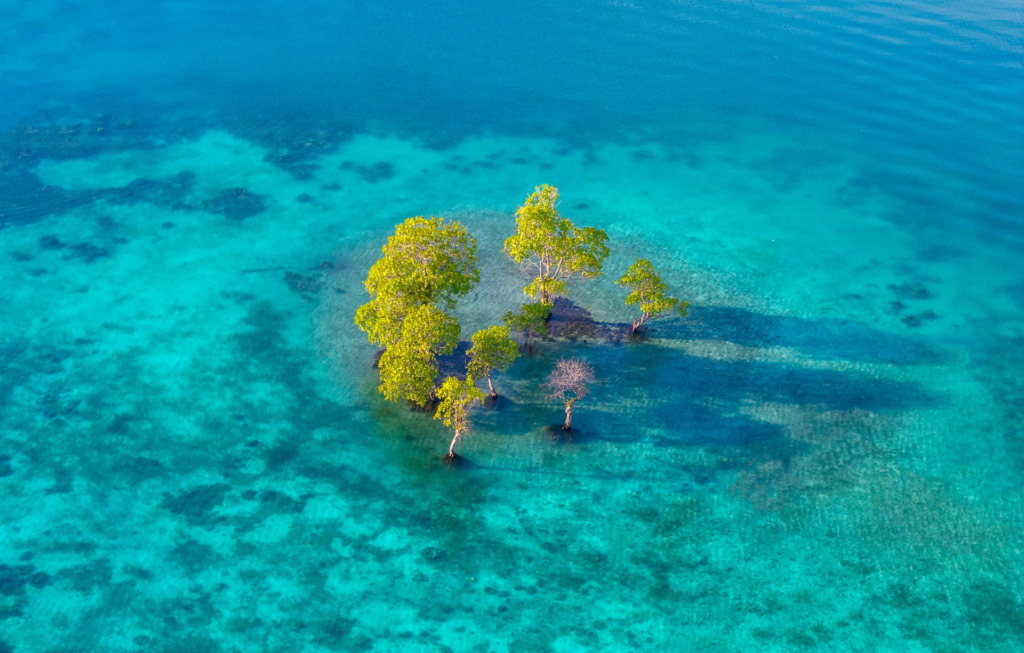
Without an engine or a fixed route, we could follow the coastline slowly. Thick green vegetation dropped towards the water, with palm trees, small fishing boats and local huts appearing around the bay.
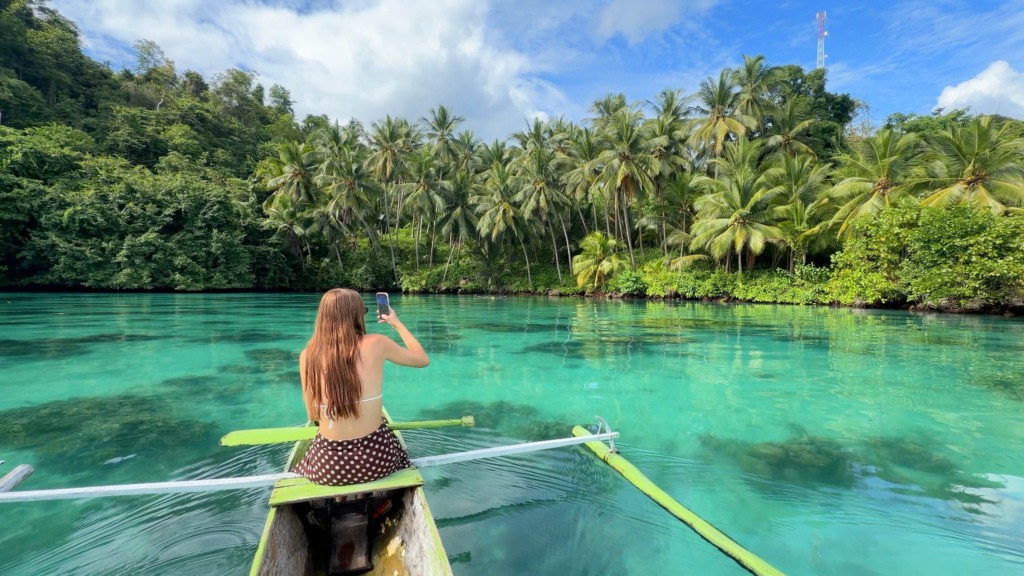
It was a very simple experience, but one that suited the pace of the area.
Explore the coastline by scooter
Between Luk Panenteng and Mandel Beach, we noticed another strip of sand that did not appear to be marked as a major attraction.
We left the scooter beside the road and followed a small path through the palms. After a short walk, an empty beach opened in front of us, with clear water and a single boat pulled onto the sand.
These smaller discoveries were part of what made Peleng Island memorable. Not every location had a name, ticket office or sign beside the road.
Spend time around Luk Panenteng
The village itself is worth exploring quietly.
The people in Luk Panenteng were incredibly friendly and welcoming. We have travelled to many places, but nowhere has felt quite as friendly as this village. That warmth made a real difference to our time there and is one of the things we remember most clearly.
In the morning, I photographed the small fishing huts, boats, palm trees and soft light across the bay. We also visited a local bathing place used as part of everyday village life rather than as a formal attraction.
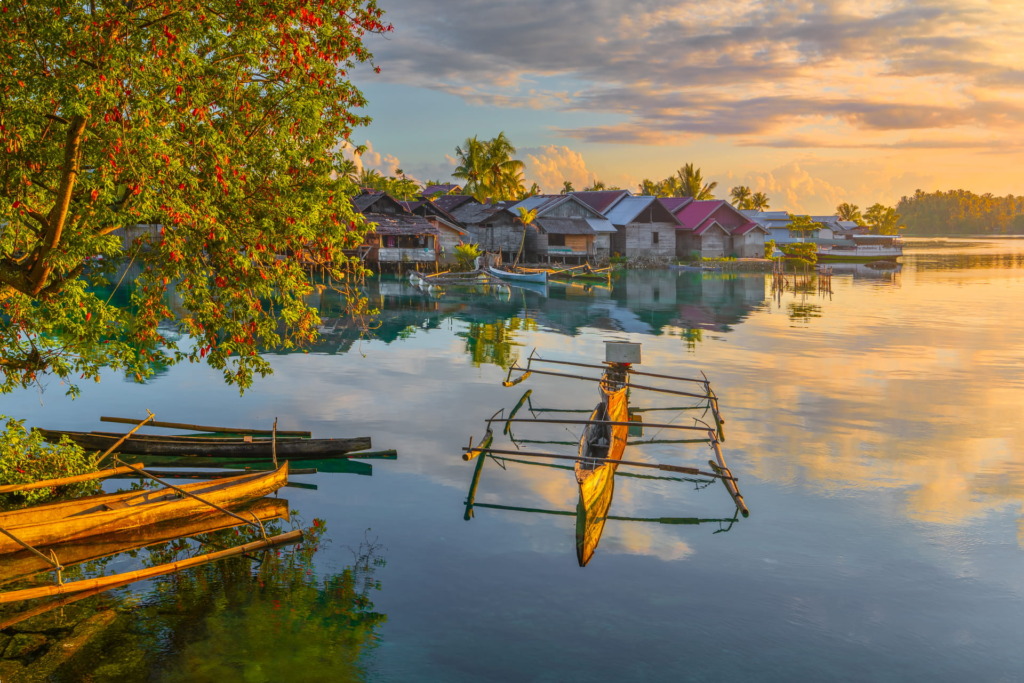
Travelling here requires some adjustment. The facilities are limited and the experience is less predictable than in Indonesia’s more established destinations. At the same time, Luk Panenteng has not been reshaped entirely around visitors.
That is central to its appeal.
What to bring to Peleng Island
Bring enough cash for your stay and local transport, as you should not rely on finding an ATM in Luk Panenteng. It is also worth carrying your own snorkelling equipment if you have space. We only used ours on a couple of occasions, but having it available gave us more flexibility. Equipment may be available to hire locally, although I would confirm this with your accommodation before relying on it.
How long should you stay near Paisu Pok?
I would allow at least two full days in Luk Panenteng, although three nights provides more flexibility.
Visiting Paisu Pok more than once gave us different light, weather and levels of activity. It also meant we could swim and paddleboard without trying to fit photography, filming and exploring into a single visit.
Additional time allows for Mandel Beach, Kuwala Bay and the surrounding coastline. It also provides some protection against rain or difficult travel connections.
This is not somewhere I would recommend rushing through simply to collect a photograph.
Is Paisu Pok Lake worth the journey?
There are easier places to reach in Indonesia.
Other destinations offer more accommodation, smoother transport and considerably more information for visitors. Travelling through the Banggai Islands requires flexibility and a willingness to accept fairly basic conditions.
For us, that was part of what made the journey worthwhile.
Paisu Pok was every bit as striking as I had hoped. Its colour, clarity and submerged trees make it one of the most photogenic places we have visited.
But the lake was only part of the experience.
The quiet mornings in Luk Panenteng, the empty beaches, slow boat journeys and evenings overlooking the bay gave the area a character that would have been easy to miss during a shorter visit.
Paisu Pok may have been the reason we travelled to Peleng Island, but it was the slower, less polished experience surrounding it that stayed with us.
You can see more photographs from this journey in my Indonesia gallery, or browse more photography location guides.
Frequently asked questions about Paisu Pok Lake
Can you swim in Paisu Pok Lake?
Yes. We swam and snorkelled in Paisu Pok Lake and found the water exceptionally clear. Paddleboards and small wooden boats were also available during our visit. Be mindful of sunscreen, insect repellent and other products that can wash into the lake, and follow any local guidance before entering the water.
What is the best time to visit Paisu Pok Lake?
Early morning is best for calm water, reflections and fewer people. Staying into the later morning allows you to see the lake’s colour become stronger as direct sunlight reaches more of the water.
Where should you stay for Paisu Pok Lake?
Luk Panenteng is the most convenient base. Accommodation is fairly simple, but staying in the village allows you to walk to the lake and return at different times of day.
How many days do you need on Peleng Island?
Allow at least two full days around Luk Panenteng. Staying for three nights gives you more time for the lake, nearby beaches and possible disruption caused by weather or transport.
What else can you visit near Paisu Pok?
Nearby places include Mandel Beach, Kuwala Bay, the coastline around Luk Panenteng and several quieter beaches reached by scooter or boat.